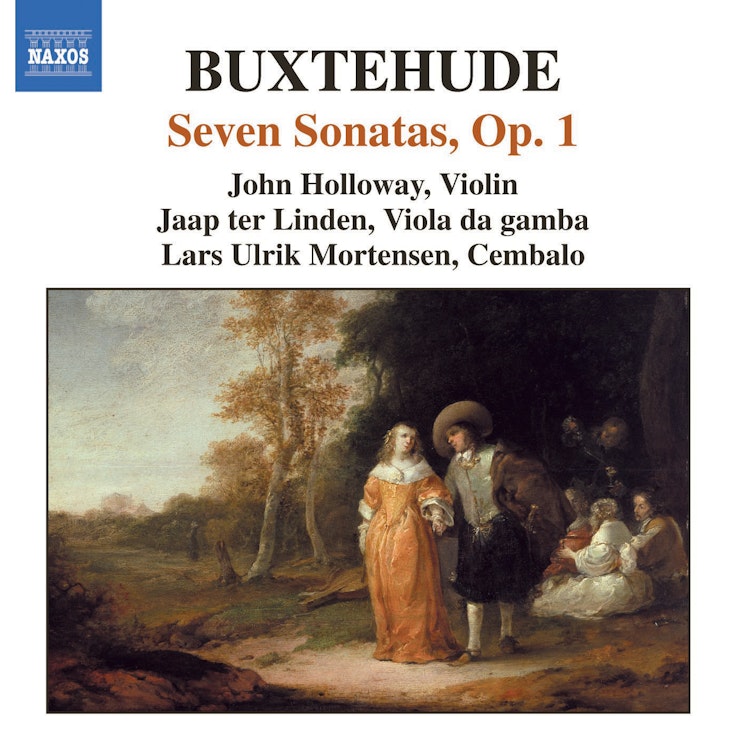
Buxtehude's instrumental chamber music, including these sonatas, remained largely neglected until recently, despite his organ works inspiring J.S. Bach and his cantatas being rediscovered over a century ago.
Composer Biography
Dietrich Buxtehude was appointed organist at St Mary's Church in Lübeck, a prestigious position in the free Hanseatic city on the Baltic coast of Germany, around 1668.
Composer's Artistic Vision
The number seven, used for the sonatas in each of Buxtehude's collections, may symbolize time (seven days of the week) or the seven planets known at the time, reflecting a musical philosophy that connected art to the macrocosm.
Composition History
Buxtehude published two collections of instrumental chamber music, Opus 1 (these sonatas) and Opus 2, in the mid-1690s, which were among the few works printed during his lifetime.
Composer's Artistic Vision
Buxtehude's sonatas often feature the 'fantastic style,' which allows for improvisatory, unrestricted composition, combined with technical discipline like fugues and canons.
Instruments
For these sonatas, Buxtehude chose the viola da gamba, a bass instrument with a three-octave range, over the violone or cello, following German tradition for its gentler sound.
Performer Biography
John Holloway, Jaap ter Linden, and Lars Ulrik Mortensen, the performers on this album, have collaborated for many years and made the first complete recording of Buxtehude's chamber music, winning a Danish Grammy in 1995.
You might also enjoy...
Handel: Trio Sonatas Op. 2
Buxtehude: Sonatas, Op. 1
Handel: Seven Trio Sonatas, Opus 5
Buxtehude: Complete Chamber Music
Telemann: Voyageur virtuose
J.G. Goldberg & W.F. Bach: Trio Sonatas
Johann Philipp Kirnberger
Corelli: Sonate a tre da chiesa e da camera
Telemann, G.P.: Chamber Music - Twv 42:D6, D9, D11, E11, F12, G15, G11 (The Publick Music)
Bonporti: Sonatas, Op. 1 for 2 Violins and B.C.
Corelli after Schickhardt
Telemann: Essercizii musici, Trio No. 4 in G Major, TWV 42:G6