Complete Works for Viola Vol. 1 "Viola and Orchestra"
7/12/2013, 14 Tracks, 1:19:58
Featuring
Hans Graf
Tabea Zimmermann
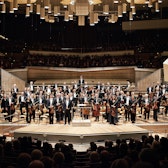
Deutsches Symphonie-Orchester Berlin
Paul Hindemith
Did you know?
1/7
Interpretation
This album features the world premiere recording of the early version of Hindemith's Konzertmusik, Op. 48, which includes a beautiful slow movement with oboe that is completely missing from the later, more commonly performed version.
Recording & Production
During a 1939 recording of Trauermusik, Hindemith reported that he had to conduct the orchestra himself during the parts where he wasn't playing, because the conductor, Bruno Reibold, was unable to adjust his conducting to the soft dynamics.
Composer Biography
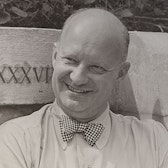
Paul Hindemith, originally an orchestral violinist, switched to playing the viola in late summer 1919, stating, "I have thrown myself completely into the viola and play the violin only in case of urgent need."
Historical Context
The year 1933 marked a turning point for Hindemith, as his work was decried as "cultural Bolshevism" by the Nazis, and propaganda minister Joseph Goebbels reviled him as a Jewish "maker of discordant noises."
Composition History
Hindemith composed his Trauermusik (Funeral Music) for solo viola and string orchestra within a few hours in January 1936 after the death of King George V cancelled his planned performance of Der Schwanendreher in London.
Performer Biography
Tabea Zimmermann, one of the leading contemporary viola players, received her first viola lessons at age three and won first prizes at several international competitions, including the Concours International in Geneva (1982) and the Maurice Vieux competition in Paris (1983).
Composer's Artistic Vision
Hindemith's success as a composer in the 1920s and 1930s was partly due to him regularly performing his own works, often tailoring viola parts specifically for himself.
You might also enjoy...
Hindemith - Complete Works for Viola Vol. 1: Viola and Orchestra
Palomo: Arabescos, Caribiana & Humoresca
Kuzmin: Sacred Songs & Incidental Music
Stamitz: Four Symphonies
Hoffmann: Arlequin, AV 41 & Overtures
Adorno & Eisler: Works for String Quartet
Cannabich: Symphonies Nos. 22 and 57 / Symphonies in G Major / A Major / D Major
Ordonez: Symphonies
Winter: Symphonies & Entr'actes
Muffat: Concertos I-VII
Cowen: Symphony No. 3 / Indian Rhapsody
Rosenberg: Concertos for Strings Nos. 1 and 4 & Svit over svenska låtar
Jonathan Leshnoff: Symphony No. 4 "Heichalos" (Performed on the Violins of Hope)