Hindemith - Complete Works for Viola Vol. 1: Viola and Orchestra
7/12/2013, 14 Tracks, 1:19:58
Featuring
Hans Graf
Tabea Zimmermann
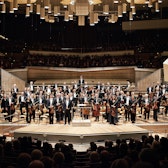
Deutsches Symphonie-Orchester Berlin
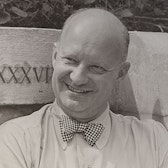
Paul Hindemith
Did you know?
1/7
Composer's Artistic Vision
Hindemith's success as a composer in the 1920s and 1930s was partly due to his regular performances of his own works, including viola parts tailor-made for himself.
Historical Context
The year 1933 marked a turning point for Hindemith as his work was decried as "cultural Bolshevism" by the Nazis, and propaganda minister Joseph Goebbels reviled him as a "Jewish 'maker of discordant noises.'"
Composition History
Hindemith composed the Trauermusik (Funeral Music) for solo viola and string orchestra within a few hours after the death of King George V, when his planned performance of Der Schwanendreher in London was cancelled.
Performer Biography
Tabea Zimmermann, a leading contemporary viola player, received her first viola lessons at age three and won first prizes at several international competitions, including the Maurice Vieux competition in Paris in 1983, where her prize was a viola made by Etienne Vatelot.
Composition History
Hindemith's viola concerto Der Schwanendreher (1935) incorporates folksong melodies whose texts deal with themes of departure, loneliness, and grief, reflecting the composer's personal feelings of being unwanted in his own country.
Recording & Production
During a 1939 recording of Trauermusik, Hindemith had to conduct the orchestra himself during sections where he wasn't playing the solo viola, due to the conductor Bruno Reibold's rigid interpretation.
Composer Biography
Paul Hindemith, originally trained as an orchestral violinist, switched to playing the viola in late summer 1919, stating, "I have thrown myself completely into the viola and play the violin only in case of urgent need."
You might also enjoy...
Complete Works for Viola Vol. 1 "Viola and Orchestra"
Palomo: Arabescos, Caribiana & Humoresca
Kuzmin: Sacred Songs & Incidental Music
Stamitz: Four Symphonies
Hoffmann: Arlequin, AV 41 & Overtures
Adorno & Eisler: Works for String Quartet
Cannabich: Symphonies Nos. 22 and 57 / Symphonies in G Major / A Major / D Major
Ordonez: Symphonies
Winter: Symphonies & Entr'actes
Muffat: Concertos I-VII
Cowen: Symphony No. 3 / Indian Rhapsody
Rosenberg: Concertos for Strings Nos. 1 and 4 & Svit over svenska låtar
Jonathan Leshnoff: Symphony No. 4 "Heichalos" (Performed on the Violins of Hope)