Beethoven's Septet Op. 20 was his most performed work during his lifetime, despite his increasing irritation with its popularity compared to other works he held in higher esteem.
Composition History
Beethoven's Trio Op. 11 is nicknamed the "Gassenhauer" (street song) Trio because its final movement's theme is a popular opera aria from Joseph Weigl's 1797 comic opera, L'Amor marinaro.
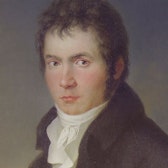
Composer Biography
The Trio Op. 38 was dedicated to Dr. Johann Adam Schmidt, a physician in whom Beethoven placed great hope for the healing of his hearing impairment, and who is mentioned twice in the Heiligenstadt Testament.
Compositional Technique
The Bagatelles Op. 119 are diverse, ranging from dancelike to brooding, noble to bizarre, and include a minuet, a hand-crossing study, a nervous Allemande, a Siciliano, a trill study, and a rapid waltz.
Composition History
Beethoven himself arranged his Septet Op. 20 for piano, clarinet, and cello, creating the Trio Op. 38, and proudly stated that others would find it hard to do as well.
Album & Artwork
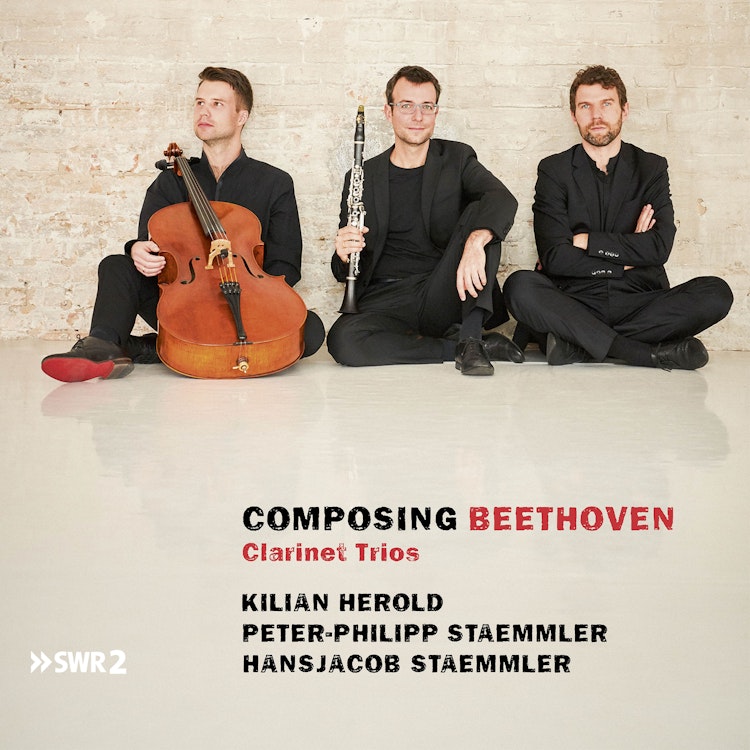
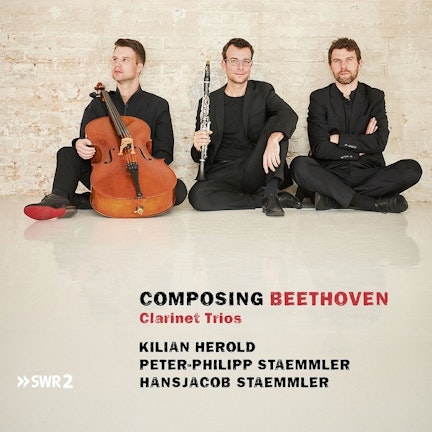
This album features a three-level concept called "Composing Beethoven": an original Beethoven work, a Beethoven arrangement of his own work, and a Beethoven work arranged by a 21st-century composer, Johannes Schöllhorn.
Composition History
Beethoven's Bagatelles Op. 119 are a collection of eleven piano "trifles" composed over two decades, assembled in 1822, and were initially met with skepticism by a publisher.
You might also enjoy...
Beethoven: Piano Trios, Vol. 5
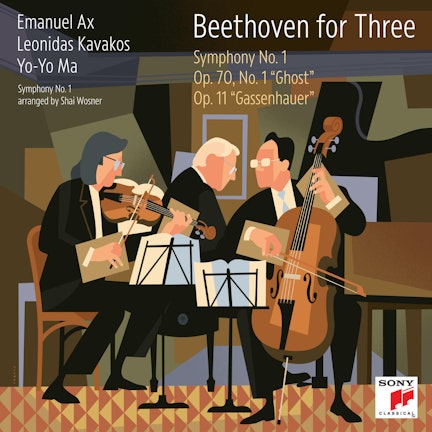
Beethoven for Three: Symphony No. 1 / Op. 70, No. 1 "Ghost" / Op. 11 "Gassenhauer"
Composing Beethoven
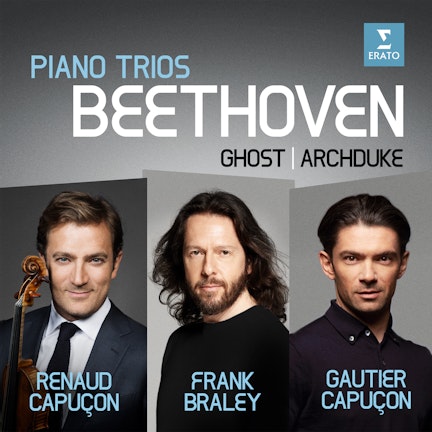
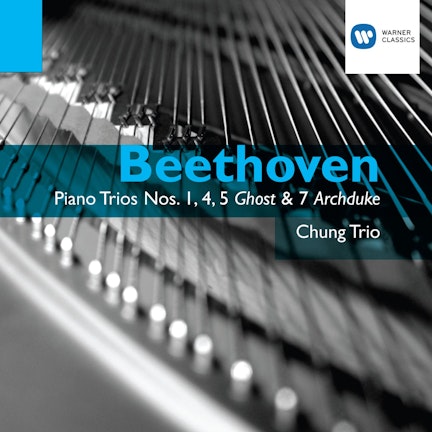
Beethoven: Piano Trios No. 5, "Ghost" & No. 7, "Archduke"
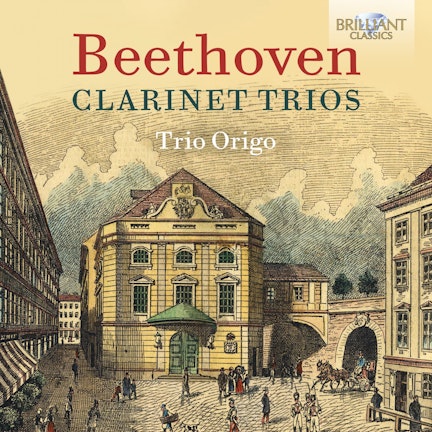
Beethoven: Clarinet Trios
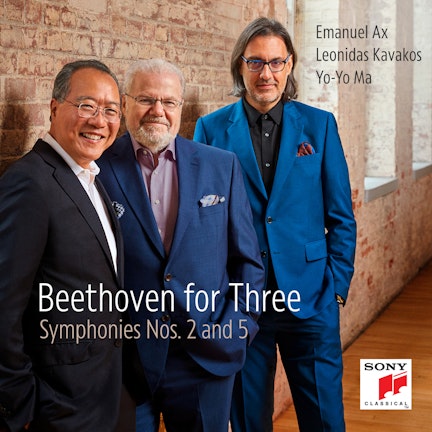
Beethoven for Three: Symphonies Nos. 2 and 5
Beethoven: Piano Trios Opp.1 No.1,11,70, No.1 & 97
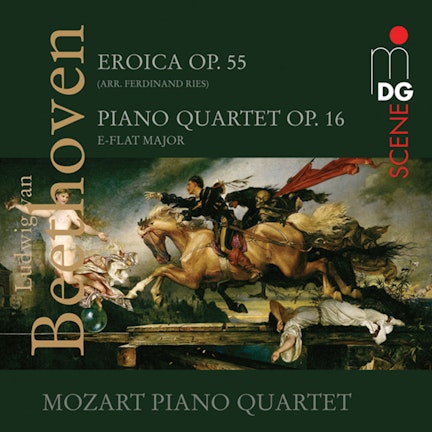
Beethoven: Eroica, Op. 55 & Piano Quartet, Op. 16
Beethoven - Fortepiano Trios
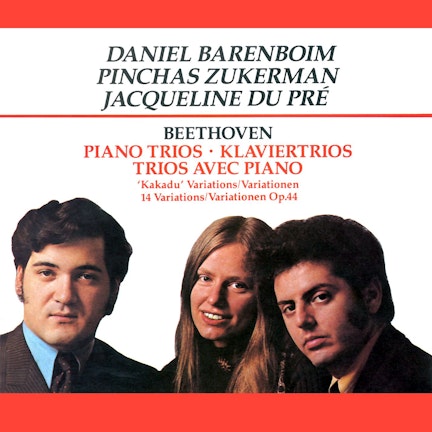
Beethoven: Piano Trios & Variations
Beethoven: Complete Piano Trios
Beethoven: Piano Trios, Op. 70 No. 2, Op. 97 "Archduke"