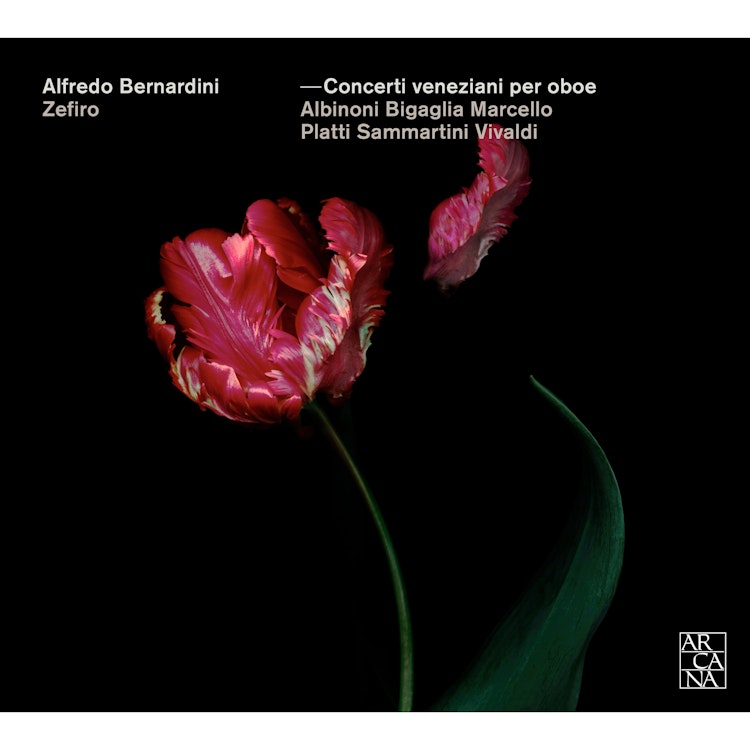
The Anciuti oboe used for this recording is made of ebony, a more durable wood than the commonly used boxwood, which helped preserve its original sound qualities.
Historical Context
The oboe concerto emerged around the first decade of the 18th century, combining the newly invented concerto genre with the oboe, a double-reed instrument perfected in France.
Historical Context
The oboe concertos on this album have connections to Northern Europe; those by Vivaldi, Marcello, and Albinoni were published in Amsterdam, while others survive in German libraries.
Instruments
The Anciuti oboe has a unique lowest note of C sharp instead of C natural, due to its short bell, but can produce a C natural by plugging one of its resonance holes with wax.
Interpretation
This recording uses a 'one-instrument-to-a-part' approach for the concertos, reflecting how they might have been played for recreational purposes in a chamber setting.
Instruments
The oboe used in this recording was made in Milan in 1730 by Giovanni Maria Anciuti, a notable woodwind instrument maker of the 18th century.
You might also enjoy...
Antonio Vivaldi: La Viola Da Gamba In Concerto
Tempesta di mare
Albinoni: Concerti con Oboe
Vivaldi: Recorder Concertos
Vivaldi : Concerti da camera Vol.2
Vivaldi: Concerti per flauto
Vivaldi Pan Flute Concertos
Vivaldi: Concerto per fagotto, Vol. 2
Caught in Italian Virtuosity
Vivaldi : Concerti da Camera Vol. 1
Two Sides
Vivaldi: Solo Concertos
Geminiani: 12 Concerti Grossi composti sull'opera V d'Arcangelo Corelli