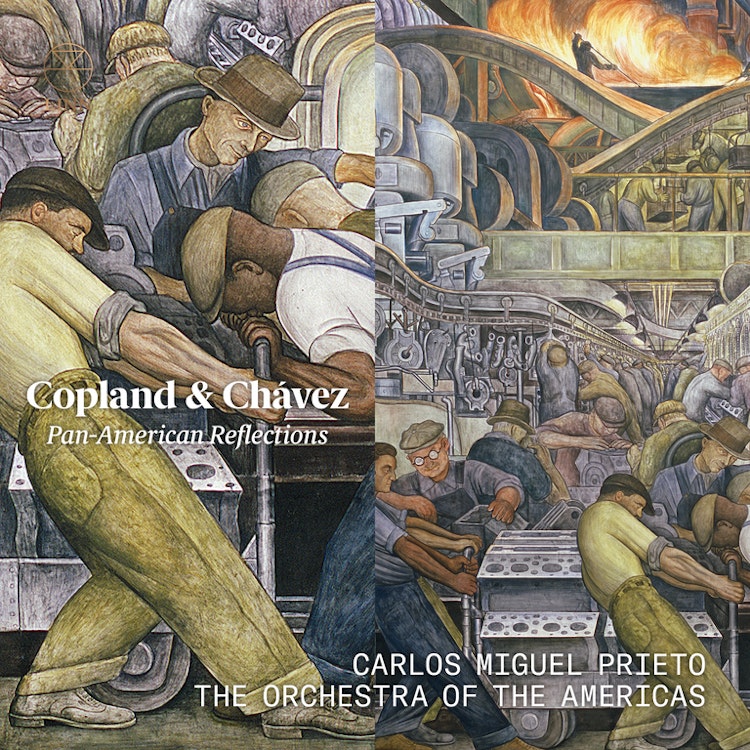
Copland and Chávez had a close personal and professional relationship, promoting each other's music in their respective countries.
Composer's Artistic Vision
Copland stated that his Third Symphony contained no popular or folk references, but he did expand upon his own Fanfare for the Common Man in the last movement to give the symphony an affirmative tone, as it was a 'war piece or, more precisely, a piece on the end of war'.
Performer Biography
Carlos Miguel Prieto, the conductor, is Musical America's 2019 Conductor of the Year and has served as Principal Conductor of The Orchestra of the Americas since its inception in 2002.
Composition History
Copland's Third Symphony was commissioned by the Koussevitzky Foundation in 1943 and was finished in September 1946.
Instruments
The orchestration of Chávez's Sinfonía india includes indigenous percussion instruments such as tlalpanhuéhuetl, water gourd, güiro, maracas, and teponaztli, which can be substituted by contemporary equivalents if originals are unavailable.
Compositional Technique
Chávez's Sinfonía india incorporates original indigenous melodies from Mexican ethnic groups (Seri, Yaqui, Huichol), rhythmic complexity, and the use of pre-Hispanic percussion instruments.
Composer's Artistic Vision
Aaron Copland and Carlos Chávez, the composers on this album, both established a musical language with a clear national profile and a modern outlook in their respective countries.
You might also enjoy...
Schuman: Symphony No. 3
Vaughan Williams: Symphony No. 5
Shankar: Symphony
Szymanowski: Symphonies Nos. 1 and 2
Harbison Symphonies 1 & 2
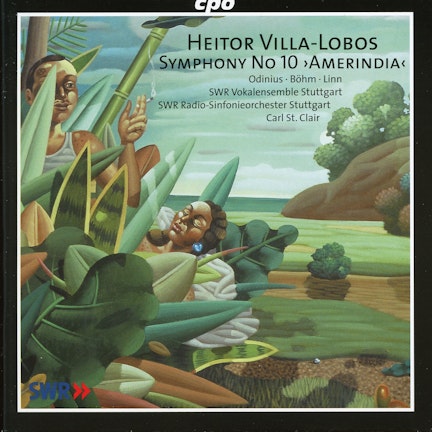
Villa-Lobos: Symphony No. 10
Szymanowski: Symphonies Nos. 1 and 2
Messiaen: Turangalîla-symphonie
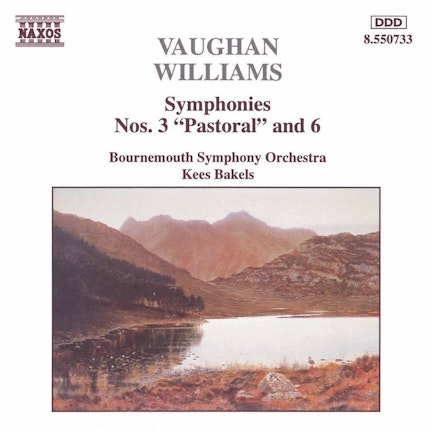
Vaughan Williams: Symphonies Nos. 3, 'Pastoral', and 6
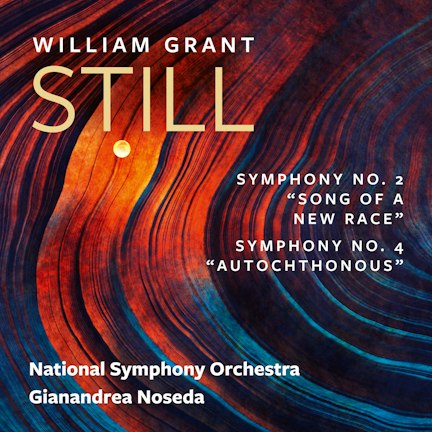
William Grant Still: Symphony No. 4 "Autochthonous", III. With a graceful lilt