For this recording, Musica Barocca used two voice flutes, a type of recorder with a lower range than the treble recorder, for the solo parts.
Interpretation
Dornel's 1709 collection allowed for optional instrumentation, suggesting that the common practice of the day permitted using whatever instruments were available for the two solo parts.
Composer Biography
Louis-Antoine Dornel, a French composer and organist, held several posts in Paris as an organist and maître de musique.
Compositional Technique
Dornel's suites include a variety of dances beyond the core four, such as Rondeaux, Air en Loure, Caprice, and Chaconnes.
Composition History
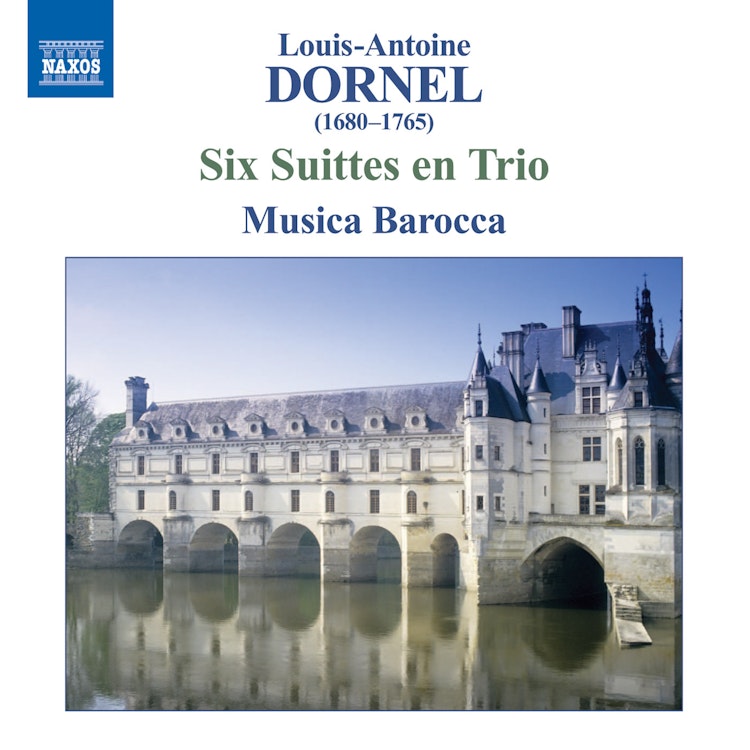
Dornel's Six Suittes en Trio, published in 1709, are instrumental suites consisting of various dances written in the same key, intended to be performed as a unit.
Compositional Technique
The suite form, as used by Dornel, typically revolved around a four-dance structure of Allemande, Courante, Sarabande, and Gigue, but composers often included other optional dances.
Compositional Technique
The 'pièces en trio' style, with two solo instruments of similar pitch accompanied by a bass, became popular in France in the 1690s, influenced by Arcangelo Corelli's trio sonatas.