Dvořák struggled for an unusually long time to achieve public recognition, only gaining it in his mid-thirties.
Composition History
Dvořák's Piano Trio No. 3 in F minor emerged from a period of self-doubt and strain, including the death of his mother, and was premiered by Dvořák himself as pianist.
Composition History
Dvořák's Piano Trio No. 2 in G minor was prompted by the death of his baby daughter, possibly following Smetana's tragic Piano Trio, also in G minor and prompted by a daughter's death.
Compositional Technique
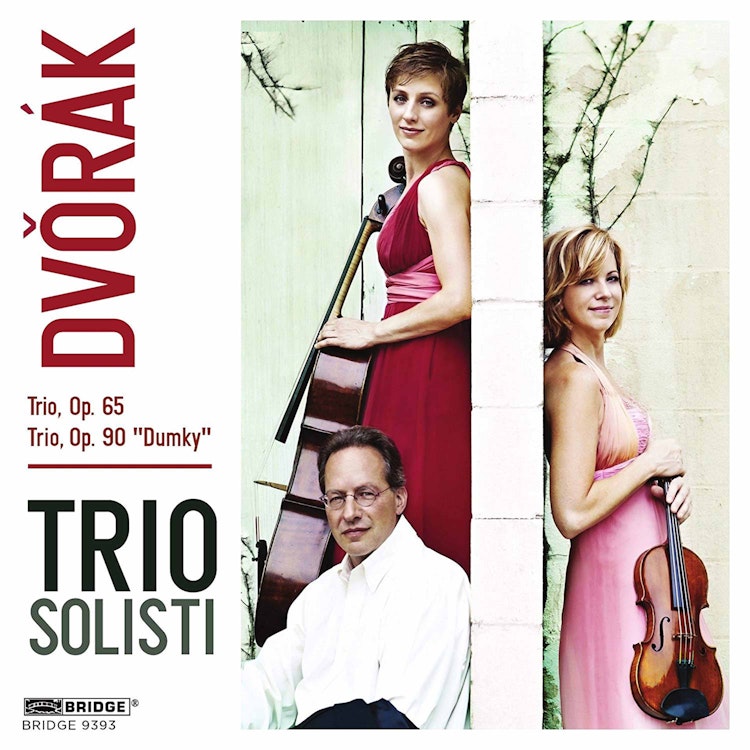
Dvořák's Piano Trio No. 4, known as the 'Dumky' Trio, is unique in its structure, being entirely built from a succession of six contrasted dumky, which are Slavonic narrative ballads with alternating slow and fast sections.
Composer's Artistic Vision
Dvořák's musical character was shaped by competing impulses: mastering classical forms, expressing lyrical impulses, and conveying the national aspirations of his countrymen.
Instruments
Maria Bachmann, the violinist for Trio Solisti, performs on a 1782 violin made by Nicolo Gagliano.
Performer Biography
Trio Solisti, hailed as "The most exciting piano trio in America" by The New Yorker Magazine, was called the successor to the Beaux Arts Trio by The Wall Street Journal.
You might also enjoy...
Shostakovich: Piano Trios Nos. 1 and 2 - Erod: Piano Trio No. 1
Tchaikovsky & Shostakovich: Piano Trios
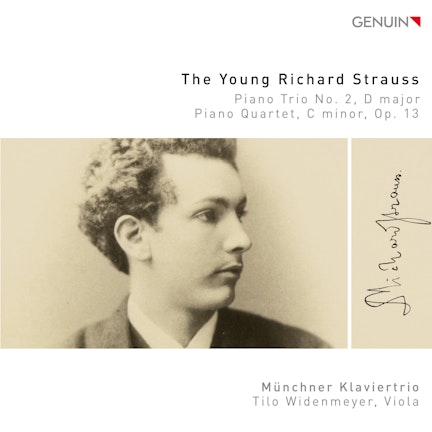
The Young Richard Strauss
Beethoven in seiner Zeit - Ferdinand Ries Piano Trios
Schumann: Piano Trios Nos. 1 & 2
Dvorák: Piano Trios Nos. 3 & 4 "Dumky"
Saint-Saens, C.: Piano Trios Nos. 1 and 2
Pfitzner & Smetana: Works for Piano Trio
Brahms: Piano Trio No. 3 in C Minor, Op. 101; Zemlinsky: Piano Trio No. 3 in D Minor, Op. 3
Strauss, R.: Piano Trios Nos. 1 and 2 / Piano Quartet in C Minor
Martucci, Casella & Clementi: Piano Trios
Pixis: Piano Trios
Tchaikovsky: Piano Trio, Op. 50 - Rimsky-Korsakov: Piano Trio: II. Scherzo (Completed M. Steinberg)
Dvorák: Piano Quartets Nos. 1 & 2
Messiaen : Quatuor pour la fin du temps [Quartet for the End of TIme]