Dvořák began his G minor piano trio in 1876 while exhausted from finishing his opera Vanda and grief-stricken by the death of his infant daughter, Josefa.
Composer Biography
Dvořák's vast musical output, including eleven operas, songs, cantatas, oratorios, symphonies, concertos, and chamber music, shows him to be a complex musical personality.
Recording & Production
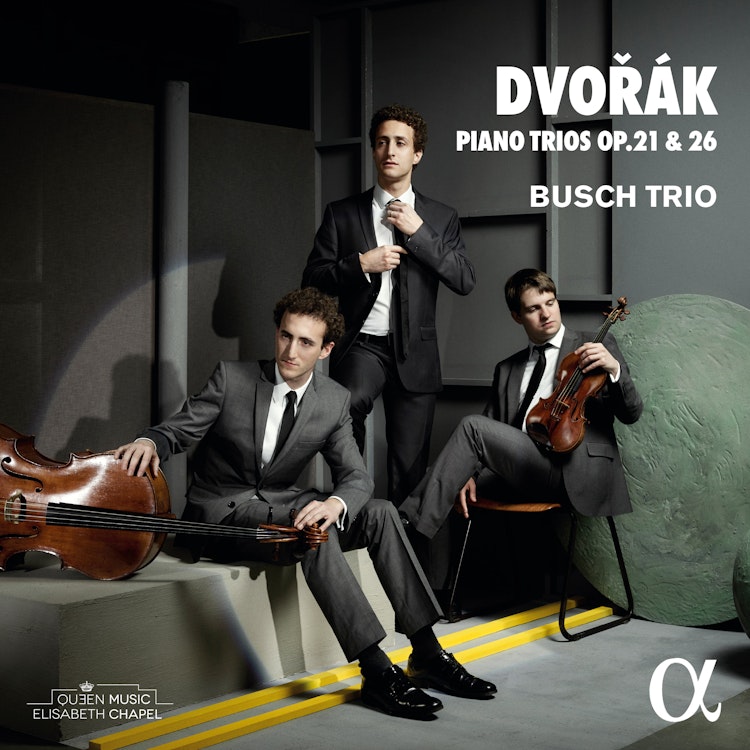
This album is the fourth and final recording in the Busch Trio's complete Dvořák cycle, concluding three years of intense preparation and recording of Dvořák's nine chamber works with keyboard.
Composition History
The year 1875 was an 'annus mirabilis' for Dvořák, during which he wrote the B-flat major piano trio, the E major string serenade, his Fifth Symphony, and other significant works.
Performer Biography
The Busch Trio is named after the legendary violinist Adolf Busch, and the trio's violinist, Mathieu van Bellen, plays Busch's G.B. Guadagnini violin from 1783.
Compositional Technique
Dvořák's G minor piano trio, though begun in dark circumstances, concludes positively in G major, reflecting his fundamental optimism.
Composition History
Dvořák originally wrote six piano trios, but only four survive; two earlier trios from 1871 or 1872 were destroyed, though an Adagio from one was performed in Prague.
You might also enjoy...
Brahms & Zemlinsky: Piano Trios
Smetana & Dvořák: The Czech Legacy II
Martucci: Piano Trios (Complete)
Dvořák: Piano Trios
Pfitzner: Piano Trio in F Major, Op. 8 & Piano Trio in B-Flat Major
Antonin Dvorak: Piano Trios 3 & 4
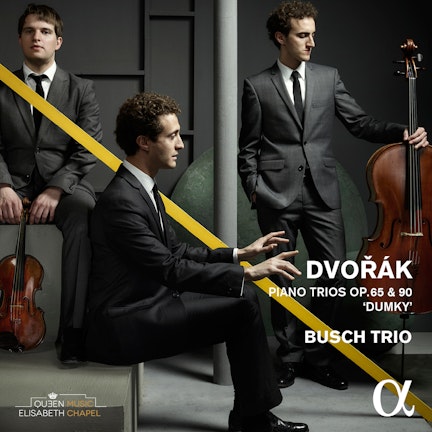
Dvořák: Piano Trios, Op. 65 & 90 "Dumky"
History of the Russian Piano Trio, Vol. 2
Dvořák: Piano Trios
Volkmann: Piano Trios Nos. 1 & 2
Brahms & Dvorak: Piano Trios
Gade: Works for Piano Trio
Brahms: Piano Trio No. 3 in C Minor, Op. 101; Zemlinsky: Piano Trio No. 3 in D Minor, Op. 3