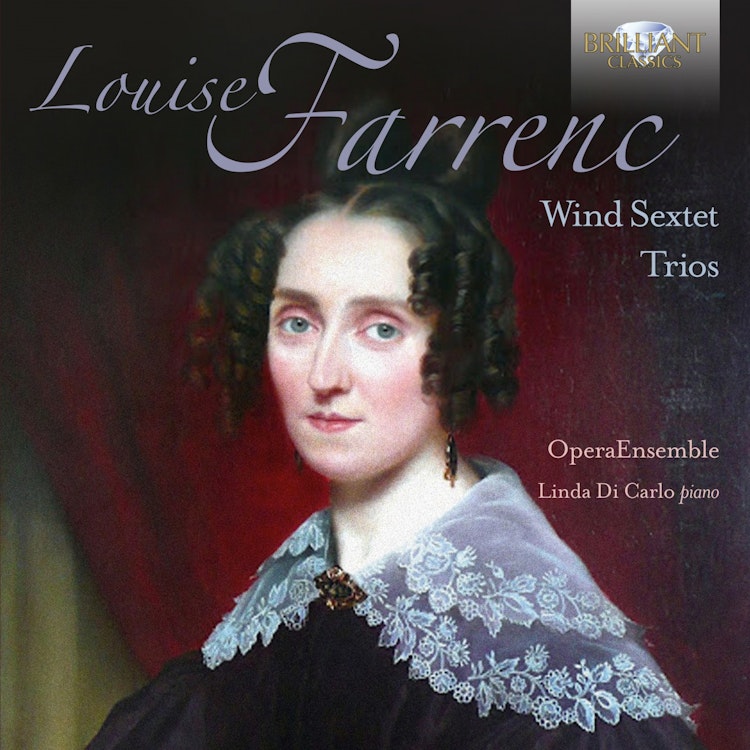
Louise Farrenc was twice awarded the Prix Chartier of the Académie des Beaux Arts for her chamber music, in 1861 and 1869.
Compositional Technique
The Sextet in C minor Op.40 is noted as the first work to combine piano with a full wind quintet (flute, oboe, clarinet, horn, and bassoon), foreshadowing Poulenc's composition 80 years later.
Performer Biography
Linda Di Carlo, the pianist on this album, is a founder member of the Quintetto Bottesini, which has performed in many countries and recorded Louise Farrenc's two Piano Quintets.
Composer Biography
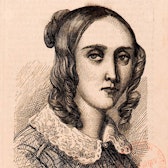
Louise Farrenc (1804-1875) came from a family of sculptors and painters and began piano lessons at an early age with her godmother, Cécile Soria, who had studied with Clementi.
Compositional Technique
While Farrenc's works follow Classical structural models, her harmonic progressions are notably adventurous, often leading the listener into unexpected territory.
Composition History
Farrenc's husband, flautist Aristide Farrenc, founded a publishing house that helped bring her compositions to the public's attention.
Historical Context
Louise Farrenc was appointed a full piano professor at the Paris Conservatoire in 1842, a time when class lessons were strictly divided between male and female students.