Kurtág's music in Kafka-Fragmente aims to express hidden areas of sensibility, amplifying the words' meaning while stressing the impossibility of grasping ultimate meaning.
Composition History
The work was composed between 1985 and 1987 and premiered in Witten the same year by Adrienne Csengery and András Keller.
Performer Biography
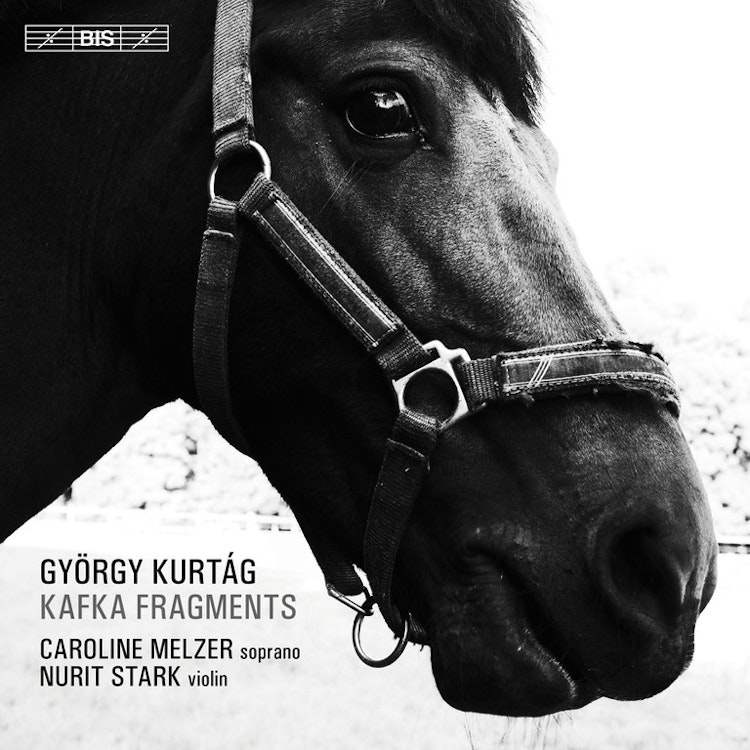
Caroline Melzer, the soprano on this recording, has a particular focus on contemporary music and has had works written for her by Aribert Reimann.
Composition History
György Kurtág's Kafka-Fragmente, Op. 24, is the longest of his many vocal cycles, based on prose texts from Franz Kafka's diaries, letters, and stories.
Compositional Technique
The pieces in Kafka-Fragmente are often extremely brief, pushing expressivity to its utmost limits within these miniature spaces, as if through crystallization.
Compositional Technique
The voice and violin parts in Kafka-Fragmente demand great virtuosity and are treated with constantly fresh imagination, ranging from complicity to dissociation.
Instruments
Nurit Stark, the violinist on this recording, plays a violin made in 1710 by Petrus Guarnerius di Mantua.
You might also enjoy...
Kurtág: Kafka-Fragmente
Robert Lemay: Fragments noirs
György Kurtág: Kafka Fragments, Op. 24
Sebastian Claren: Gagokbounce: One By One
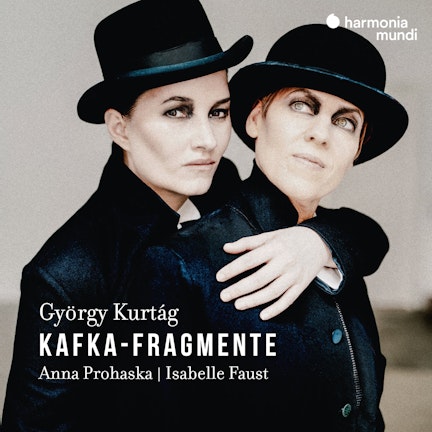
György Kurtág: Kafka-Fragmente
David Taddie: Fancy Colors
Bach: Sonate a Viola da Gamba e Cembalo Obbligato
Markus Stockhausen Plays Karlheinz Stockhausen
Cold Stability
Boulez: Répons; Dialogue de l'ombre double
Sekhon: Places & Times
The Billy Collins Suite (Songs Inspired by his Poetry)