GRAMMY® Nominations 2026: Best Classical Solo Vocal Album
Featuring
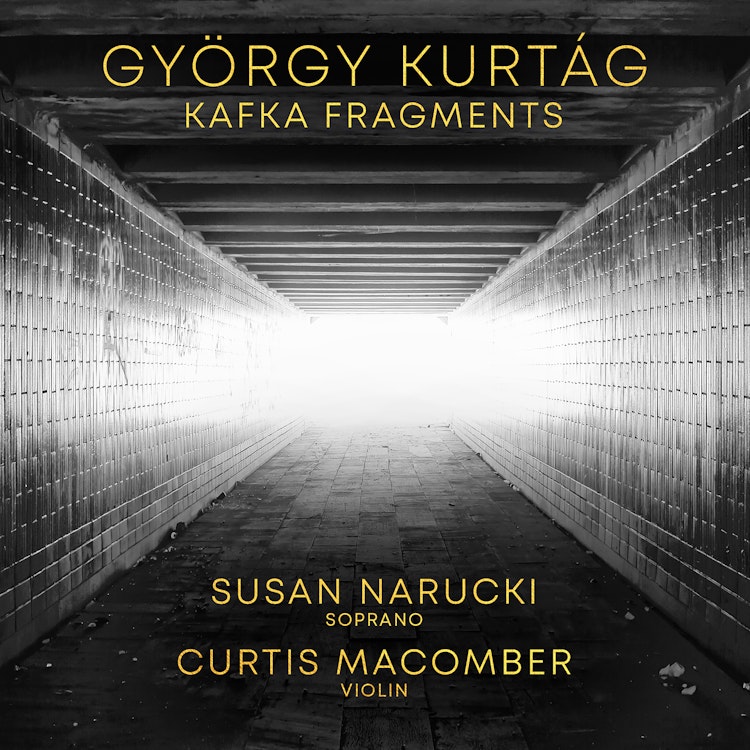
Susan Narucki
Curtis Macomber
György Kurtág
Did you know?
1/7
Performer Biography
Soprano Susan Narucki, a performer on this recording, won a 2000 Grammy™ award for George Crumb's Star-Child and received two additional Grammy™ nominations for Best Classical Vocal Recording.
Composition History
The premiere of Kafka Fragments was given by two Hungarian artists, soprano Adrienne Csengery and violinist András Keller, who were closely associated with the composer György Kurtág's music.
Composition History
György Kurtág's Kafka Fragments, Op.24, completed in 1986, is an hour-long work that has captivated musicians for nearly 40 years.
Performer Biography
Violinist Curtis Macomber, featured on this recording, is recognized as a leading interpreter of contemporary music and has an extensive discography including a critically acclaimed recording of Roger Sessions' Solo Violin Sonata.
Composer's Artistic Vision
In Kafka Fragments, composer György Kurtág explores the relationship between text and music, where each fragment is generated by a singular idea and every musical gesture supports its underlying expression.
Compositional Technique
Kafka Fragments consists of four parts and 40 distinct movements, some lasting less than a minute, with texts primarily drawn from Franz Kafka's diaries and letters.
Compositional Technique
Despite being meticulously constructed in composer György Kurtág's unique notation system, the overall effect of Kafka Fragments is a compositional language that feels intuitive, porous, and alive.
You might also enjoy...
Kurtág: Kafka-Fragmente
Robert Lemay: Fragments noirs
György Kurtág: Kafka-Fragmente, Op. 24
Sebastian Claren: Gagokbounce: One By One
György Kurtág: Kafka-Fragmente
David Taddie: Fancy Colors
Bach: Sonate a Viola da Gamba e Cembalo Obbligato
Markus Stockhausen Plays Karlheinz Stockhausen
Cold Stability
Boulez: Répons; Dialogue de l'ombre double
Sekhon: Places & Times
The Billy Collins Suite (Songs Inspired by his Poetry)