In his Symphony No. 1, Mendelssohn paid tribute to Viennese Classicism, particularly Beethoven, through his choice of the historically significant key of C minor.
Performer Biography
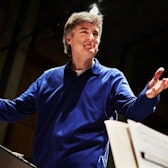
Thomas Dausgaard, the conductor, was chief conductor of the Swedish Chamber Orchestra for 22 years, from 1997 until 2019, and is now its conductor laureate.
Critical Reception
After a successful London performance of Symphony No. 1, the English music periodical The Harmonicon predicted Mendelssohn would become the 'fourth' great symphonist after Haydn, Mozart, and Beethoven.
Composition History
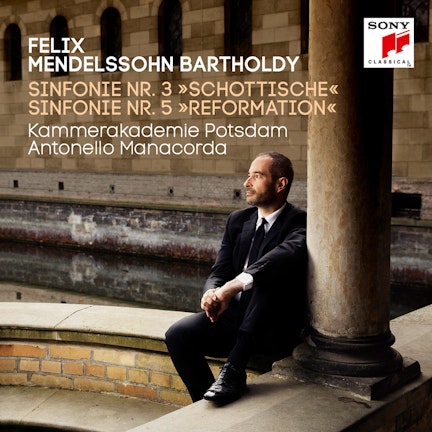
Mendelssohn conceived the beginning of his 'Scottish' Symphony in 1829 after visiting the ruined chapel where Mary Stuart was crowned Queen of Scotland.
Compositional Technique
In the 'Scottish' Symphony, Mendelssohn innovatively connected all movements attacca (without pauses) to maintain the atmosphere, a device he described as 'to get rid of the pauses that destroy the atmosphere between the movements'.
Composition History
Mendelssohn's Symphony No. 1 was initially numbered 'No. XIII' by the 15-year-old composer, placing it in the context of his earlier string symphonies.
Composition History
The 'Scottish' Symphony, though chronologically Mendelssohn's last symphony completed in 1842, is known as the Third Symphony because it was published before the 'Italian' Symphony.