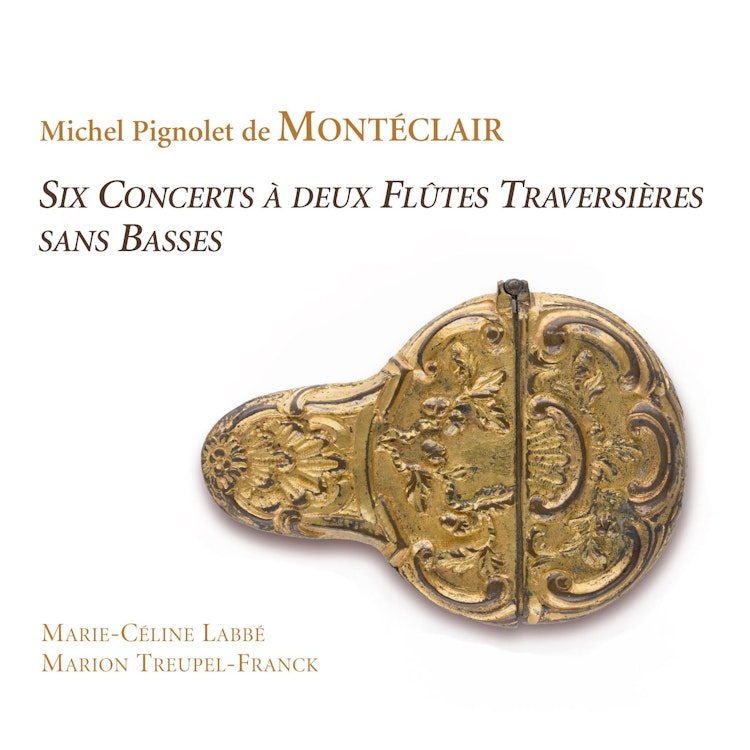
Montéclair: Six concerts à deux flûtes traversières sans basses
8/25/2011, 59 Tracks, 1:46:48
Featuring
Marie-Céline Labbé
Marion Treupel-Franck
Michel Pignolet de Montéclair
Did you know?
1/7
Historical Context
The fortress of Montéclair, which protected the composer's hometown of Andelot, was razed in 1635 during the Thirty Years' War, along with over 2000 other castles deemed 'of no use in the service of the King'.
Composer Biography
Michel Pignolet de Montéclair, the composer, was born in Andelot, a village near the border with Lorraine, which was once a significant frontier city.
Composer Biography
Montéclair, the youngest of nine children, was discovered by canons from Langres cathedral at age eight and trained in the children's choir of Saint-Mammès cathedral for over ten years.
Compositional Technique
Montéclair's concertos feature many short, richly ornamented pieces, mostly in dance-form, with evocative titles reflecting the French taste for descriptive music.
Composition History
The Concertos for two transverse flutes without bass were published between 1721 and 1724 by the composer's nephew, François Boivin.
Recording & Production
The performers, Marion Treupel-Franck and Marie-Céline Labbé, undertook a research trip to France in 2009 to learn more about Montéclair's life and work before recording the album.
Composer Biography
Montéclair was engaged as a basse de violon player in the orchestra of the Royal Academy of Music in Paris in 1699 and later introduced the double-bass to the orchestra.
You might also enjoy...
Harbison: Chamber Music
Saariaho, Alsted, Jeppsson, Eiríksdóttir, Ore, Becker, Lund: New Nordic Chamber Music
Ispirare
Métamorphoses
Songs of Love and Exile
Charles & Frédéric-Nicolas Duvernoy: Clarinet Chamber Music