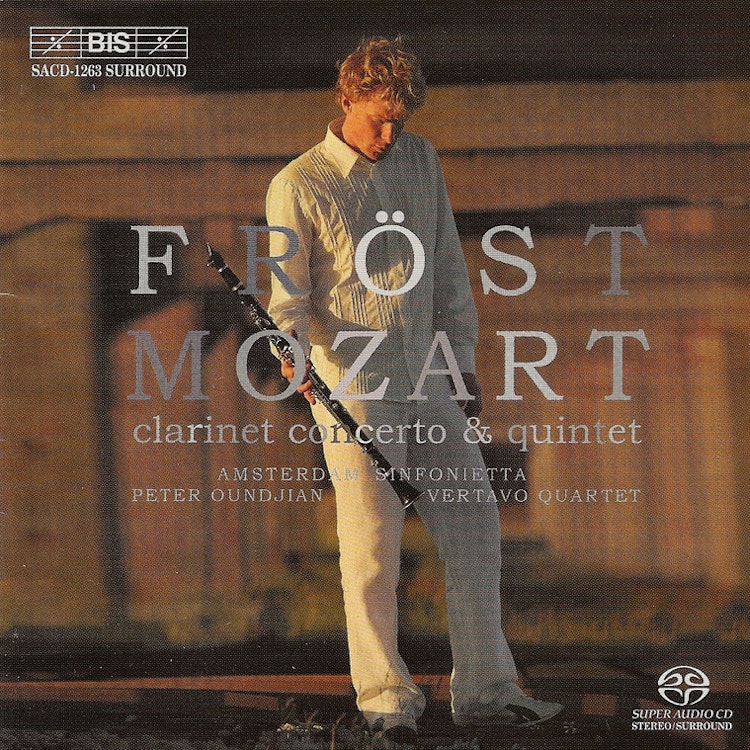
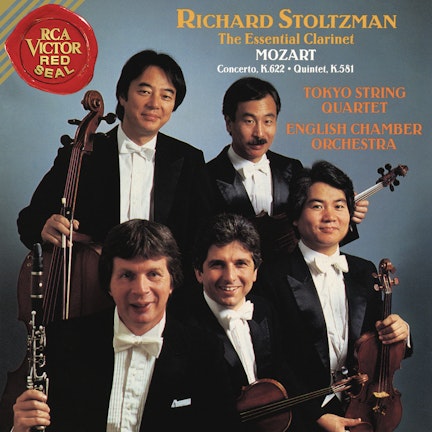
Mozart: Clarinet Concerto in A Major, K. 622 & Clarinet Quintet in A Major, K. 581
3/1/2004, 7 Tracks, 1:04:16
Featuring
Peter Oundjian
Martin Fröst
Øyvor Volle
Berit Værnes Cardas
Henninge Båtnes Landås
Bjørg Værnes Lewis
Amsterdam Sinfonietta
Vertavo String Quartet
Wolfgang Amadeus Mozart
Did you know?
1/7
Recording & Production
This Hybrid SACD recording uses Direct Stream Digital (DSD) technology, which captures 2.8 million samples per second, offering a wider dynamic range and frequency response than traditional CD technology.
Composition History
Mozart was so impressed by Anton Stadler's clarinet playing that he composed several major works specifically for him, including the Clarinet Quintet in A major, KV581, and the Clarinet Concerto in A major, KV622.
Historical Context
Anton Stadler, a virtuoso clarinetist, and his brother Johann helped establish the clarinet, a relatively new instrument in the mid-18th century, in the classical music world.
Critical Reception
An eager reviewer of the time enthusiastically called Mozart's Clarinet Concerto in A major, KV622, "the finest clarinet concerto in the world" for its beautiful, regular, and tasteful writing.
Compositional Technique
The Clarinet Concerto in A major, KV622, Mozart's last completed instrumental work, is considered a highlight of the concerto repertoire due to its virtuoso versatility and the symbiotic relationship between the solo instrument and the orchestra.
Performer Biography
Martin Fröst, the Swedish clarinetist on this recording, is known for exploring new aspects of musical creativity and pushing the limits of musical expression, inspiring numerous composers to write for him.
Recording & Production
The Hybrid SACD contains three versions of the DSD master recording: a multi-bit CD version, an SACD stereo version with greater resolution, and a surround sound version for multichannel players.
You might also enjoy...
Mozart: Clarinet Concerto - Clarinet Quintet
Mozart: Clarinet Concerto K.622; Clarinet Quintet K.581: Classic Library Series
Mozart: Clarinet Quintet, K. 581 & Clarinet Concerto, K. 622
Mozart: Clarinet Concerto, K. 622 & Clarinet Quintet, K. 581
Mozart: Clarinet Concerto in A / Clarinet Quintet in A
Mozart: Clarinet Concerto / Clarinet Quintet in A Major
Mozart: Clarinet Concerto in A Major, K. 622 & Clarinet Quintet in A Major, K. 581
Mozart: Clarinet Concerto / Clarinet Quintet
Mozart: Clarinet Concerto & Clarinet Quintet
Mozart: Clarinet Concerto, K. 622 & Clarinet Quintet in A, K. 581
Mozart: Clarinet Concerto, K. 622 & Clarinet Quintet, K. 581
Mozart At Tanglewood
Mozart: Clarinet Concerto in A Major K.622 & Clarinet Quintet in A Major K.581 - Sony Classical Originals
Mozart: Clarinet Concerto in A Major, K. 622 & Clarinet Quintet in A Major, K. 581