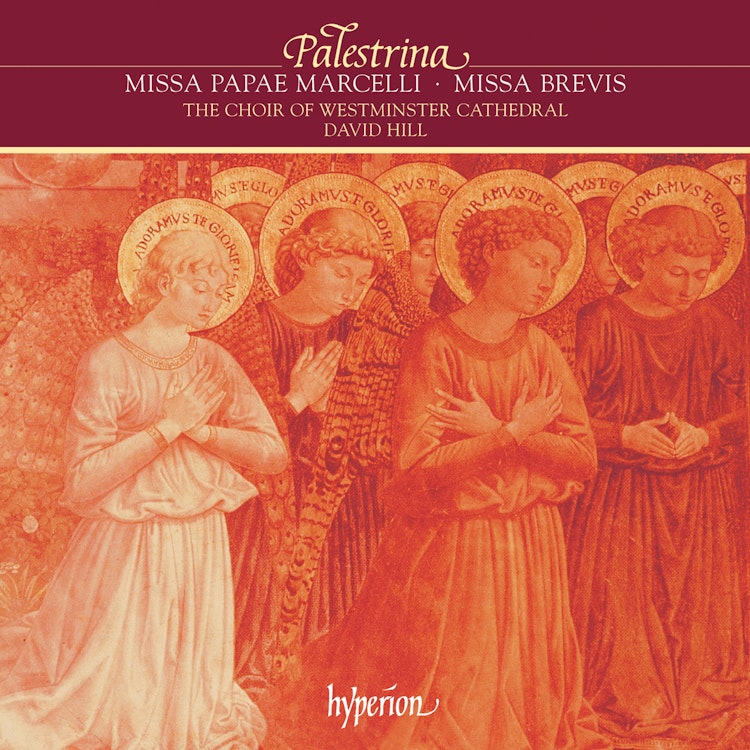
This album was recorded in Westminster Cathedral, London, in May 1987, with David Hill as Master of the Music for The Choir of Westminster Cathedral.
Historical Context
Cardinal Borromeo called for 'la musica intelligibile'—music that made the Mass texts clear for the congregation—following the Council of Trent's injunctions in 1562.
Composer Biography
Palestrina, considered the grand master of the polyphonic style, composed over 104 Masses, 375 motets, 65 hymns, 35 Magnificats, and 140 madrigals.
Compositional Technique
The Missa Papae Marcelli achieves liturgical clarity, simplicity, and melodic, harmonic, and rhythmic refinement, ensuring every word of the text is clearly projected.
Composition History
The Missa Papae Marcelli is Palestrina's most famous work, surrounded by myths that it saved polyphonic Church music from abolition during the Counter-Reformation.
Composer Biography
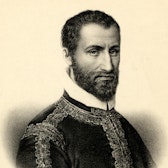
Giovanni Pierluigi da Palestrina, the composer, was dismissed from the Sistine Chapel by Pope Paul IV because he was married, which was considered an unacceptable status.
Composition History
Palestrina's Missa Brevis, first published in 1570, is not particularly short despite its title, which was likely chosen because no other title suggested itself.
You might also enjoy...
Byrd: Infelix ego
Tomás Luis de Victoria: Requiem "Officium defunctorum"
Victoria: Missa "Vidi Speciosam"; Motet "Vidi Speciosam"; Responsorium IV; Motet "O Domine Jesu Christe"; Responsorium IV; Responsorium VI; Lectio III; Responsorium IX; Motet "Dum Complerentur"; Motet "Surrexit Pastor Bonus"
Byrd and his Contemporaries
Byrd: Motets
Roma æterna
Byrd: Mass in 5 Parts; Magnificat & Nunc Dimittis
The Golden Renaissance: William Byrd
Gesualdo: Sacrae Cantiones Liber secundus
Josquin Des Prez: Messe "Pange lingua" & Miserere
Byrd: Laudibus in sanctis & Other Sacred Music (Byrd Edition 10)
Victoria: Missa Trahe me post te & Other Sacred Music