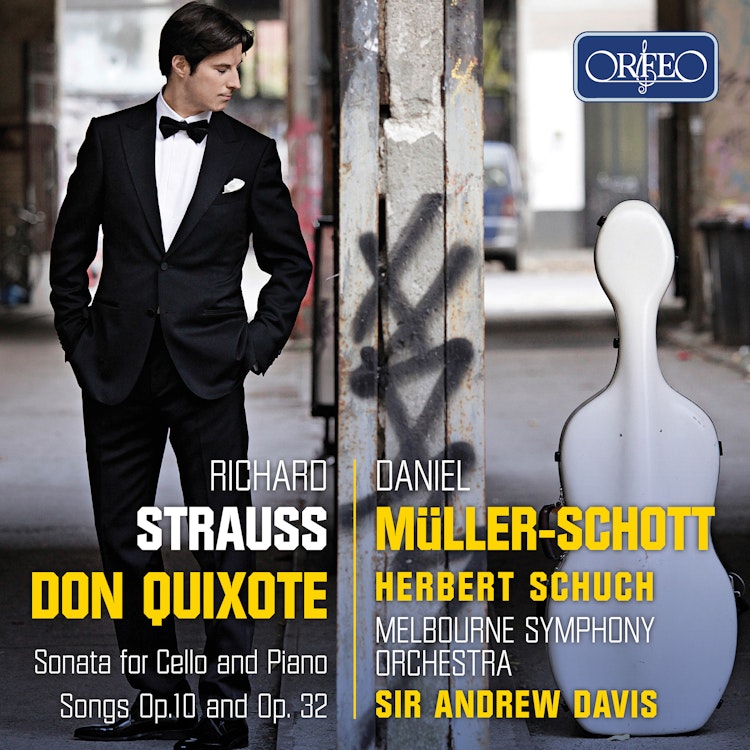
R. Strauss: Don Quixote, Op. 35, TrV 184 & Other Works
7/12/2019, 19 Tracks, 1:10:19
Richard Strauss wrote relatively little for cello, but Daniel Müller-Schott's album shows this music as charting Strauss's shift from Romanticism to Modernism. Müller-Schott plays the early Cello Sonata op. 6 with pianist Herbert Schuch, and the later tone poem Don Quixote op. 35 (with its cello part representing the protagonist) with the Melbourne Symphony Orchestra and Sir Andrew Davis. The cellist's own transcriptions of several of Strauss's Lieder highlight this shift in compositional style.
Featuring
Daniel Müller-Schott
Herbert Schuch
Sir Andrew Davis
James Ehnes
Christopher Moore
Melbourne Symphony Orchestra
Richard Strauss
Did you know?
1/7
Compositional Technique
In his 'Fantastic Variations on a Knightly Theme' (Don Quixote), Strauss subverts the traditional variation form by placing the underlying theme at the end, rather than the beginning.
Performer Biography
Sir Andrew Davis, the conductor for this album, has been the musical and artistic leader at several distinguished opera and symphonic institutions for over 40 years, including the BBC Symphony Orchestra and Glyndebourne Festival Opera.
Critical Reception
The premiere of Strauss's tone poem 'Don Quixote' in 1898 was not universally well received, as his musical modernism was considered too advanced by some listeners and critics.
Instruments
Daniel Müller-Schott, the cellist on this recording, plays the 'Ex Shapiro' Matteo Goffriller cello, made in Venice in 1727, and a bow by FX Tourte from Paris, circa 1820.
Composer's Artistic Vision
Richard Strauss was fascinated by Cervantes' parody of medievalist novels in 'Don Quixote de la Mancha' and, in turn, used his compositional resources to parody an entire musical genre.
Composer Biography
Richard Strauss composed his Cello Sonata in F major, Op. 6, while still a grammar-school pupil, completing the revised version in 1882/83.
Composition History
Strauss dedicated his Cello Sonata in F major, Op. 6, to Hans Wihan, a famous Czech cellist and colleague of his father, who premiered it in 1883.
You might also enjoy...
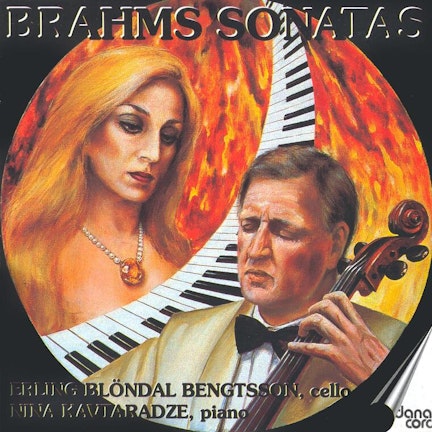
Brahms: Sonatas, Op. 38 & 39
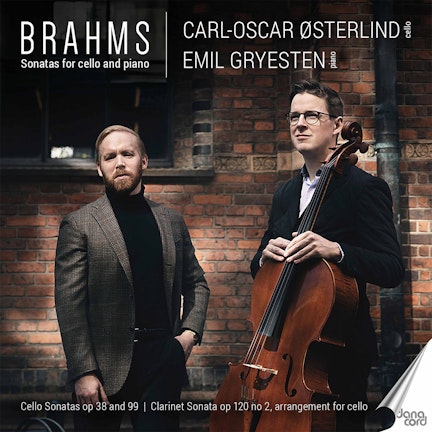
Brahms: Sonatas for Cello and Piano
Mendelssohn-Bartholdy: Duo Sonatas For Cello And Piano
R. Strauss, Thuille: Cello Sonatas
Brahms: Cello Sonatas - Stanford: Ballata
Brahms Cello Sonatas 1&2, Four Serious Songs
Fuchs: The Complete Works for Cello & Piano
Brahms: Cello Sonatas Opp. 38, 78 and 99
Brahms: Cello Sonatas
Brahms: Cello Sonatas
Mendelssohn, Grieg & Hough: Cello Sonatas
Brahms, Franck & Debussy: Sonates pour violoncelle & piano