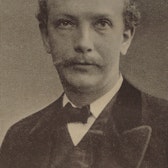
Richard Strauss initially intended to call his "Alpine Symphony" "The Antichrist," referencing Friedrich Nietzsche's critique of Christianity, but later changed the title, likely for financial reasons.
Critical Reception
The 1898 premiere of "Don Juan" in Weimar established the 24-year-old Richard Strauss as the most important composer since Richard Wagner.
Composition History
Richard Strauss's symphonic poem "Don Juan" was inspired by Nikolaus Lenau's verse drama of the same name, from which Strauss extracted three passages to describe Don Juan's character.
Compositional Technique
The "Alpine Symphony" uses a huge late Romantic orchestra, including special instruments like heckelphone, Wagnerian tubas, organ, celesta, and an offstage brass section with twelve horns.
Composer's Artistic Vision
The "Alpine Symphony" aims to depict the human mind and its emotional responses to nature, with the wanderer's path symbolizing the journey through life.
Performer Biography
François-Xavier Roth, the conductor, founded the innovative orchestra Les Siècles in 2003, which performs contrasting programs on both modern and period instruments.
Composition History
Richard Strauss worked on his "Alpine Symphony" for nearly a decade and a half, in contrast to the short time it took to compose "Don Juan."
You might also enjoy...
R. Strauss: An Alpine Symphony, Op. 64, TrV 233
R. Strauss: Don Quixote & Till Eulenspiegel
Richard Strauss: Ein Heldenleben; Till Eulenspiegels lustige Streiche
Strauss: Don Quixote, Op. 35 & Tod und Verklärung, Op. 24
Richard Strauss: Also sprach Zarathustra; Don Juan
Joseph Keilberth conducts Richard Strauss Orchestral Works
Strauss: Ein Heldenleben & Don Juan
Strauss: Don Quixote - Tod und Verklärung
Richard Strauss: Tone Poems, Vol. 1
Strauss: Also sprach Zarathustra; Ein Heldenleben
R. Strauss: Don Juan, Op. 20 & Tod und Verklärung, Op. 24