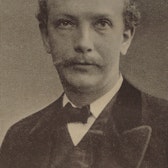
Richard Strauss playfully suggested that his most opulent scores, like the operas Salome and Elektra, should be conducted "as if they had been written by Mendelssohn: elfin music."
Composition History
Richard Strauss, at 25, reported to his father that his new work, Don Juan, would make a "tremendous stir," a prediction that proved true at its 1889 premiere.
Composer Biography
The solo violin in Ein Heldenleben (A Hero's Life) represents Richard Strauss's wife, Pauline, who he described as "a bit rough, but she's what I need."
Performer Biography
Bernard Haitink, the conductor on this album, was the London Philharmonic Orchestra's principal Conductor from 1967-79 and is now Conductor Laureate of Amsterdam's Royal Concertgebouw Orchestra.
Composer Biography
Richard Strauss's father, Franz Strauss, was the principal horn of the Munich Court Orchestra and a phenomenal player, influencing his son's formidable horn writing.
Composition History
Richard Strauss composed Ein Heldenleben (A Hero's Life) partly to fulfill a "pressing need" because he felt Beethoven's 'Eroica' Symphony was "so little beloved of our conductors."
Compositional Technique
In Ein Heldenleben (A Hero's Life), Richard Strauss portrays his critics with "weirdly chattering woodwind figures" and a "lumpen fifths" motif for tubas.
You might also enjoy...
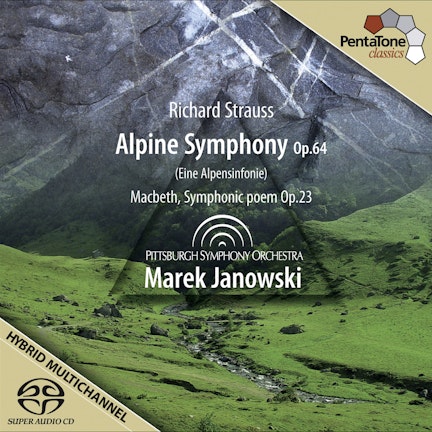
R. Strauss: An Alpine Symphony, Op. 64, TrV 233
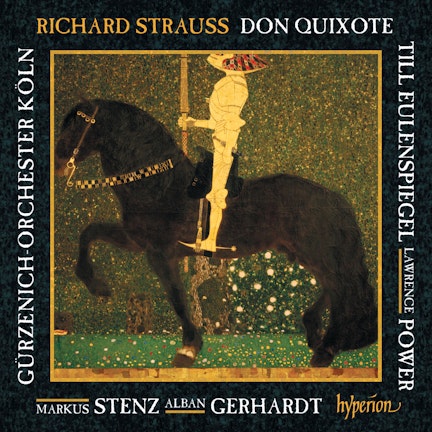
R. Strauss: Don Quixote & Till Eulenspiegel
R. Strauss: Tone Poems, Vol. 4
Richard Strauss: Ein Heldenleben; Till Eulenspiegels lustige Streiche
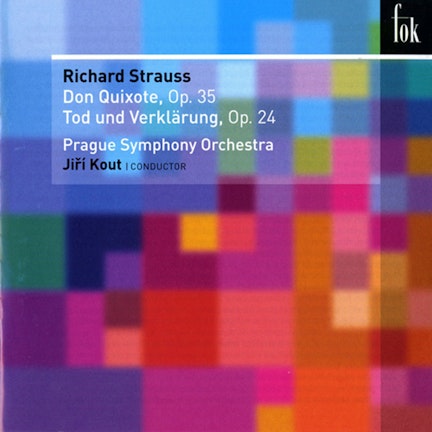
Strauss: Don Quixote, Op. 35 & Tod und Verklärung, Op. 24
Richard Strauss: Also sprach Zarathustra; Don Juan
Joseph Keilberth conducts Richard Strauss Orchestral Works
Strauss: Don Quixote - Tod und Verklärung
Richard Strauss: Tone Poems, Vol. 1
Strauss: Also sprach Zarathustra; Ein Heldenleben
R. Strauss: Don Juan, Op. 20 & Tod und Verklärung, Op. 24