Church Slavonic, the language of this piece, is to Slavic languages what Latin is to Romance languages, serving as a unifying element for Ukraine, Russia, and other Slavic countries.
Compositional Technique
Rachmaninoff's All-Night Vigil orchestrates for voices with the same complexity and nuance as his orchestral works, testing extreme vocal ranges.
Composer Biography
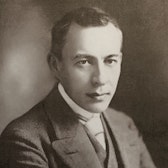
Rachmaninoff was forced to flee his home due to the Bolshevik revolution and found it difficult to compose after leaving Russia, eventually settling in the United States.
Composer's Artistic Vision
Rachmaninoff's All-Night Vigil and Liturgy were likely not intended specifically for liturgical performance, allowing them to appeal to a wide audience regardless of religious persuasion.
Compositional Technique
Ten of the fifteen hymns in Rachmaninoff's All-Night Vigil are based on unison chant melodies from centuries-old chant books, while the remaining five are original chant-like melodies he called 'conscious counterfeits'.
Composition History
Rachmaninoff composed his two main sacred choral works, the Liturgy of St. John Chrysostom (1910) and the All-Night Vigil (1915), with the Moscow Synodal Choir in mind.
Interpretation
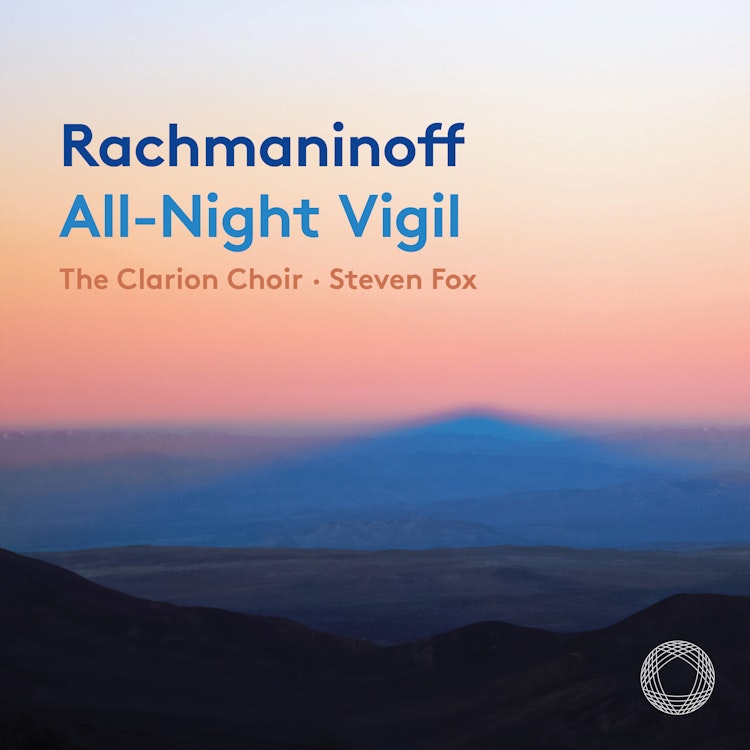
Steven Fox, the conductor of The Clarion Choir, has lived with Rachmaninoff's All-Night Vigil for over twenty years, first studying and performing it as an undergraduate at Dartmouth College.