The fourth movement of 'Out of Doors', 'The Night's Music', is a prototype for Bartók's later 'night music' pieces, inspired by the sounds of nature like a 'frogs' concert' in the Hungarian Plain.
Compositional Technique
Bartók's 'Fourteen Bagatelles' laid the foundation for his mature style, abandoning the pianistic exuberance of Liszt and Brahms for a percussive piano style derived from Hungarian dances.
Composition History
Bartók's 'Out of Doors' suite is a 'hymn to the countryside,' reflecting his dislike for city life, which he had depicted as violent in his pantomime 'The Miraculous Mandarin'.
Compositional Technique
The 'Two Romanian Dances' feature the preeminence of the tritone (Diabolus in musica), complex chords, and chromaticism, adapting the irregular repetitions of traditional Romanian dances into larger forms.
Composer Biography
After a period of personal crisis and a halt in composing, Bartók was inspired by the discovery of old Italian keyboard masters like Scarlatti, Zipoli, and Della Ciaja, alongside Stravinsky.
Composer's Artistic Vision
Béla Bartók's ethnomusicological research, culminating in his three-volume work 'Romanian Folk Music', is fundamental to understanding his compositions.
Composer's Artistic Vision
Bartók's 'Improvisations on Hungarian Peasant Songs' represent the peak of complexity in his folk-influenced language, creating tension between simple tunes and modern musical fabric.
You might also enjoy...
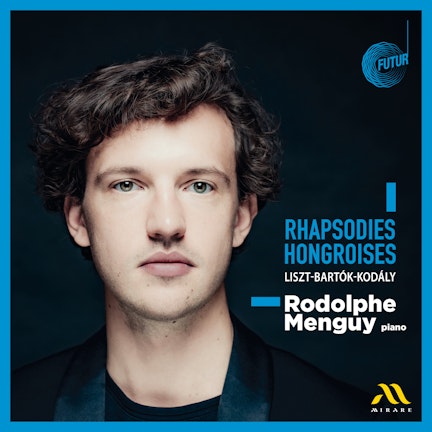
Rhapsodies hongroises
Liszt: Piano Works
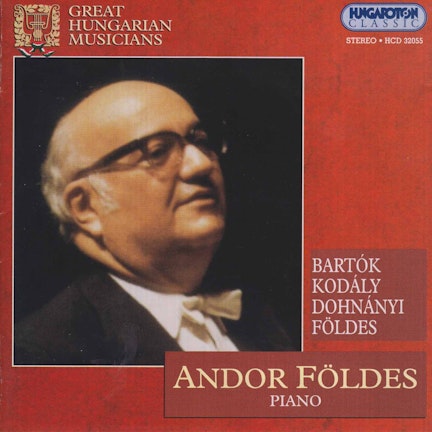
Great Hungarian Musicians: Andor Földes
Liszt: Sonata in B Minor; 2 Legends; Scherzo & March
Liszt: Transcriptions of Symphonic Poems
Lev Vlassenko Performs Liszt, Vol. 2
Bartók: Piano Works
Between Heaven & Hell - Liszt
Liszt: Sonata In B minor; Mephisto Waltz No. 1; Liebestraum No. 3; La Chapelle de Guillaume Tell