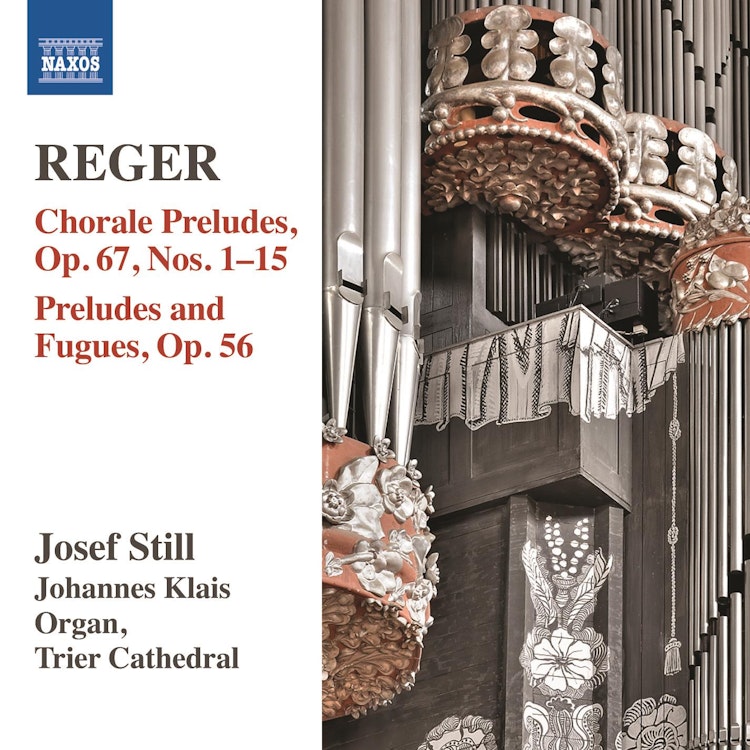
The title of Reger's "Five Easily Performable Preludes and Fugues, Op. 56" is deceptive, as these pieces present significant technical demands for performers.
Composer Biography
Reger studied with Hugo Riemann, a prominent music theorist and pedagogue, first as a pupil and later as his assistant in Wiesbaden.
Critical Reception
Reger's organ compositions were highly esteemed even during his lifetime, largely due to the advocacy of Karl Straube, an organist at the Thomaskirche in Leipzig.
Composer Biography
In 1911, Reger was invited by the Duke of Saxe-Meiningen to conduct the court orchestra, an ensemble previously led by Hans von Bülow and Richard Strauss.
Composer Biography
Max Reger's early interest in music was inspired by his father, a schoolmaster and amateur musician, and his initial training came from the town organist of Weiden, Adalbert Lindner.
Composer's Artistic Vision
Reger was seen as a champion of absolute music and was initially hostile to program music and the legacy of composers like Wagner and Liszt.
Composer's Artistic Vision
Max Reger, though Catholic, drew inspiration from the Lutheran tradition and its rich store of chorales for his organ works.
You might also enjoy...
Die Orgeln im Freiburger Münster - Chororgel - Künstlerfreunde
Otto Olsson: Organ Works
Czerny: Complete Organ Music
Reger: Organ Works, Vol. 8
Reger: Complete Organ Works, Vol. 9
Reger, M.: Organ Works, Vol. 1
The Roots & The Flower: Counterpoint in Bloom
Liszt - The Organ Composer
Organ Recital: Higgs, David - Bach, J.S. / Franck, C. / Schumann, R. / Mozart, W.A. / Conte, D. / Liszt, F. / Daquin, L. (Inaugural Recital)