At 36, Carl Reinecke achieved a professional breakthrough, becoming conductor of the Leipzig Gewandhaus Orchestra and a professor of composition at the Leipzig Conservatory.
Composer Biography
By the age of ten, Carl Reinecke was already contributing to his family's income, giving piano lessons and assisting in Hamburg's orchestras and choral societies.
Composer's Artistic Vision
Carl Reinecke maintained a detachment from programmatic music, believing that music should not attempt to express anything concrete, a view he shared with Mendelssohn.
Critical Reception
Despite his success as a pianist, Reinecke's own music was considered old-fashioned during the rise of Wagnerism, and his conducting style was seen as passive.
Instruments
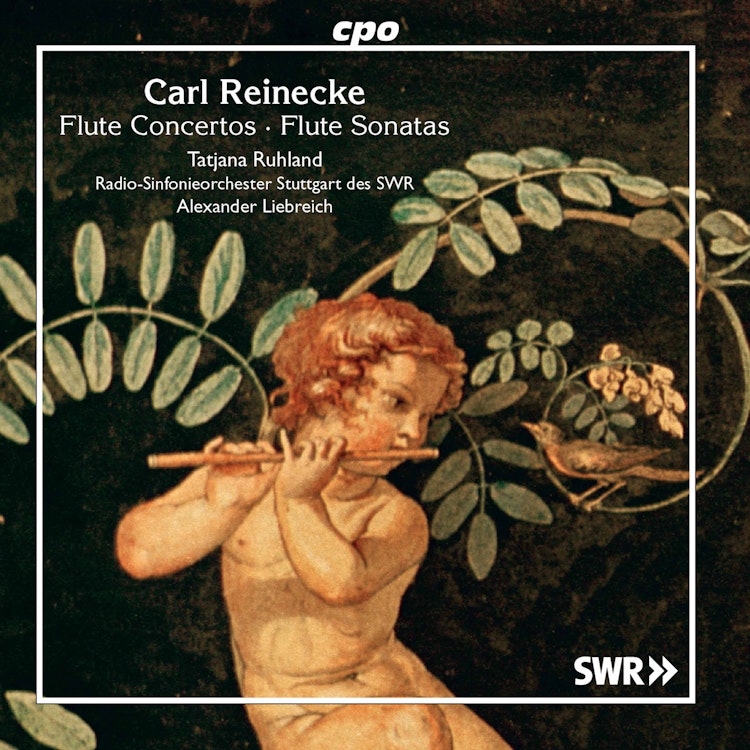
Tatjana Ruhland, the flautist on this album, plays a 14K gold Muramatsu flute.
Composition History
Reinecke's Flute Sonata, Undine, was written in 1882 for Wilhelm Bargiel, the principal flautist of the Gewandhaus Orchestra, who had just accepted a teaching position at the Conservatory.
Composer Biography
Carl Reinecke, born in 1824 in Altona (then under Danish rule), was privately educated by his father, a music teacher who taught him piano and composition.
You might also enjoy...
From the Hudson Valley
Rietz, Mendelssohn & Reinecke: Sonates romantiques
Beethoven & Hummel: Schöne Minka
Debussy et ses amis
Fantaisie hongroise
Faure & Franck: Sonates
In the Age of Ravel
The Great Book of Flute Sonatas, Vol. 7: The 20th Century Western Europe
To Pan and Syrinx
French Composers Flute and Piano
Schneider: 4 Flute Sonatas
Edvard Grieg: Violin Sonatas for Flute
Prokofiev: Sonata for Violin and Piano No. 1 in F Minor, Op. 80 (Arr. Ariane Brisson for Flute and Piano): IV. Allegrissimo - Andante assai, con prima