Weinberg's "Jewish Songs, Op. 13" was originally published under the title "Children's Songs," which suppressed its Jewish-Yiddish character.
Recording & Production
This recording uses 24-bit / 96 kHz technology, which offers a dynamic range up to 48 dB greater and 256 times the resolution of standard 16-bit recordings.
Historical Context
The album's title, "Russian Roots," reflects the diverse origins of the music, including indigenous roots, those recalled by exiles, introduced roots, and transplanted roots.
Composition History
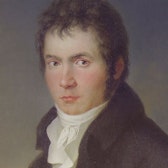
Beethoven's "Four Russian Folksongs" were sent to his publisher in 1816 but were not printed until 1941, and may have been intended for his Russian patrons in Vienna, such as Count Rasumovsky.
Composer Biography
Weinberg's "Sorrow" from "Jewish Songs" reflects his personal tragedy, as he had lost family members to pogroms and executions, and later his parents and sister in a Nazi facility.
Performer Biography
Katharina Konradi, the soprano on this recording, is the first from Kyrgyzstan to achieve an international career as a lied, concert, and opera singer.
Composer Biography
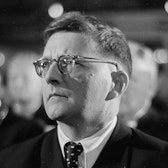
Mieczysław Weinberg, a Polish-Jewish composer, fled his native Poland for Soviet Russia in 1939 to escape the German invasion, encouraged by Dmitri Shostakovich.
You might also enjoy...
Welt & Traum
"M'arrêter ici…" (Esquisses d'Asie Mineure)
Amor eterno
Romances séfarades: Dans l'empire de la Sublime Porte
Exils. Celles qui restent, Celles qui partent…
Musique de la Grèce antique
El Cancionero De La Colombina
Fire and Water: The Spirit of Renaissance Spain
Requiem for an Emperor
The Splendour of Florence with a Burgundian Resonance
Canta la Maddalena
Cesti: Cantatas & Arias
Schubert, Schumann, Brahms & Wagner: Rheinmädchen
Vocal Music (Renaissance) - Josquin Des Prez / Isaac, H. / Senfl, L. / Obrecht, J.