Schumann often infused his works with names, codes, numbers, allusions, and references, believing that deciphering these 'secret codes' would reward listeners with 'unexpected' discoveries.
Compositional Technique
Schumann's Carnaval Op. 9 is based on three permutations of the letters from the town of Asch (A, S, C, H), which were also contained in his last name.
Critical Reception
Carnaval Op. 9 was initially considered too difficult and strange for public performance, with Chopin reportedly saying it was 'not music at all,' but it later became a staple of the piano repertoire.
Composition History
Schumann's Nachtstücke Op. 23 was originally titled Corpse Fantasy (Leichenphantasie) after he had premonitions about his brother Eduard's death, but his fiancée Clara Wieck advised him to change the macabre title.
Performer Biography
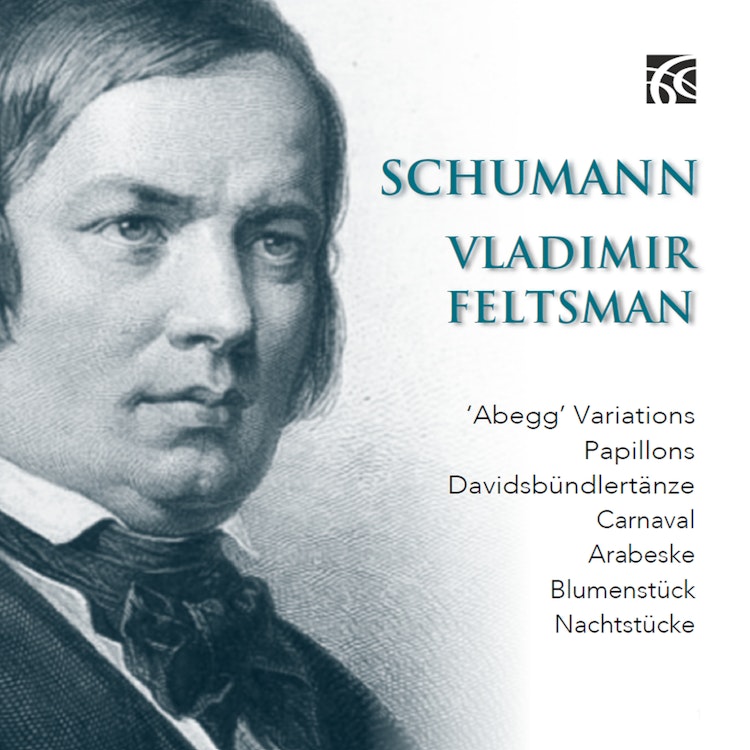
Pianist Vladimir Feltsman debuted with the Moscow Philharmonic at age 11 and won the Grand Prix at the Marguerite Long International Piano Competition in Paris in 1971.
Composition History
Papillons Op. 2 was inspired by Jean Paul's novel Flegeljahre, with Schumann insisting that reading the masked ball scene from the book was key to understanding his intentions.
Composer Biography
Schumann's first published work, Variations on the name 'Abegg' Op. 1, was dedicated to a fictitious 'Countess Pauline von Abegg', but was inspired by a real pianist named Meta Abegg.