Sibelius: Lemminkainen in Tuonela (1896 Version) / 3 Pieces / in Memoriam
10/1/2007, 10 Tracks, 1:17:59
Featuring
Osmo Vänskä
Marko Ylönen
Jaakko Kuusisto
Kristiina Mäkela
Matleena Vakkilainen
Lahti Symphony Orchestra
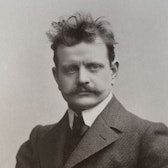
Jean Sibelius
Did you know?
1/7
Compositional Technique
Sibelius revised his funeral march "In memoriam" because he felt the original instrumentation was poor, making it "much more flexible and of a more noble character."
Composition History
Sibelius considered writing a requiem for Eugen Schauman, the Finnish patriot who assassinated the Russian governor-general, and may have used some of this material for his funeral march "In memoriam."
Composer Biography
During the composition of his Humoresques, Sibelius struggled with alcohol and financial difficulties due to World War I, forcing him to write many miniatures for local publishers.
Critical Reception
The piece "Autrefois" by Sibelius was once suggested to be a new "Valse triste," but the composer disagreed, stating, "But I don't share that view."
Cultural Impact
Sibelius's "Valse chevaleresque" was disliked by his wife, Aino Sibelius, who saw it as a symbol of his worst alcoholic excesses.
Historical Context
In 1904, a Finnish patriot named Eugen Schauman assassinated the despised Russian governor-general Nikolai Bobrikov in Helsinki, an event that jubilated Sibelius and his friends.
Composition History
The original orchestral score and parts for Sibelius's Humoresque No. 1 were mislaid, requiring him to rewrite them for a 1940 performance, resulting in many differences from the original.
You might also enjoy...
Lindberg, M.: Feria / Corrente Ii / Arena
Raitio: The Swans, Op. 15
Rautavaara: Before the Icons - A Tapestry of Life
Peat, Smoke & Seaweed Storm
Magnus Lindberg: Al largo, Cello Concerto No. 2 & Era