After World War II, Toru Takemitsu was first exposed to American art and popular music through the U.S. Armed Forces Network, before discovering European modernist music.
Composer's Artistic Vision
Toru Takemitsu was a co-founder of the avant-garde multimedia group Jikken-kōbō (Experimental Workshop) in 1951, alongside composers Joji Yuasa and Hiroyoshi Suzuki, pianist Takahiro Sonoda, and critic Kuniharu Akiyama.
Composer Biography
Toru Takemitsu composed music for over ninety films, including famous works like Philip Kaufman's Rising Sun and Akira Kurosawa's Ran.
Composer Biography
Toru Takemitsu was largely self-taught as a composer, though he briefly studied with Japanese composers Yasuji Kiyose and Fumio Hayasaka.
Composer's Artistic Vision
Toru Takemitsu viewed his music as a "sonic garden," where different musical elements represent components like grass, trees, and rocks, allowing for a listening experience without a clear beginning or end.
Composer's Artistic Vision
Toru Takemitsu's aesthetic was influenced by the complex Japanese philosophical concept of ma, which he described as the dichotomy between sound and silence, emphasizing space and tension.
Compositional Technique
Toru Takemitsu's A Way a Lone for string quartet is dominated by the intervals of a minor second and a fourth, which he referred to as the 'Intervals of the SEA' (E-flat, E, A).
You might also enjoy...
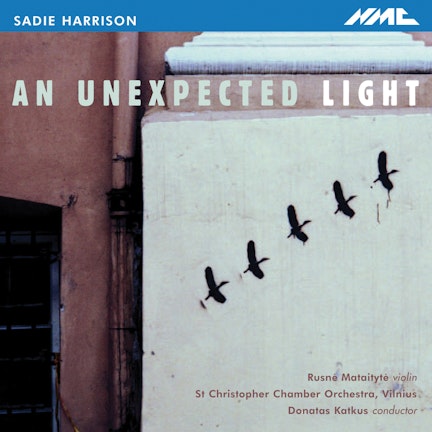
Sadie Harrison: An Unexpected Light
Lazarof: Chamber Music
Granados: Chamber Music with Piano
Kancheli: Middleheim & 18 Miniatures
Jeremy Dale Roberts: Tristia & Croquis
Echoes of Time
Gao Ping: Piano Quintet "Mei, Lan, Zhu, Ju", The Mountain & 12-Hour Bridge
Giya Kancheli: Miniatures for Violin and Piano
Korngold: Violin Concerto in D Major, Op. 35 (Live)