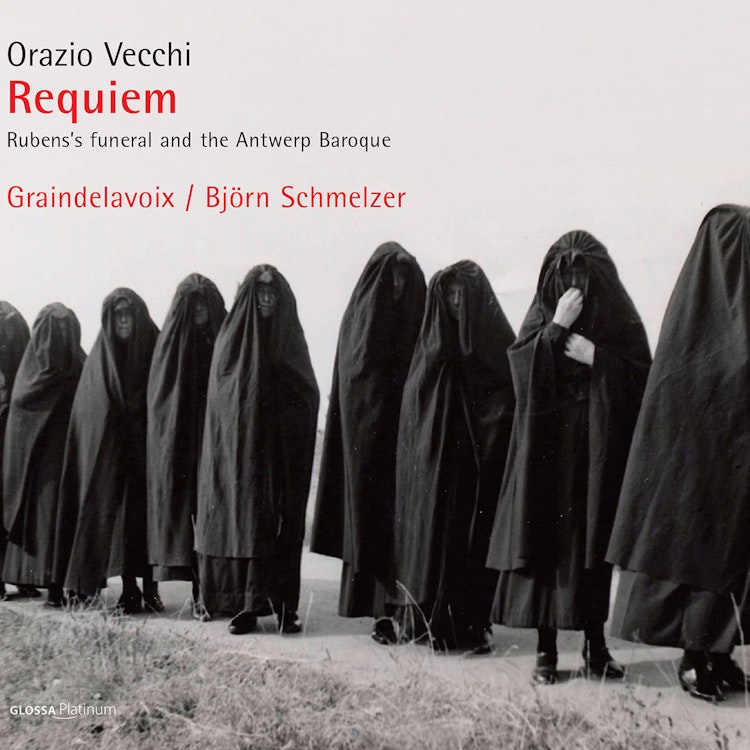
Vecchi: Requiem – Rubens's Funeral & The Antwerp Baroque
3/24/2017, 14 Tracks, 1:06:59
Featuring
Björn Schmelzer
Graindelavoix
Orazio Vecchi
Paolo Bravusi
George de La Hèle
Pedro Rimonte
Duarte Lobo
Did you know?
1/7
Compositional Technique
Vecchi's Requiem uses the pre-Tridentine graduale 'Si ambulem' instead of the usual 'Requiem aeternam' and includes a complete polyphonic 'Dies irae', allowing for a modest liturgical drama with dramatic chromatic changes and double choir structure.
Composer's Artistic Vision
The album explores a 'Baroque in disguise' in Antwerp, contrasting the grandiose style of Rubens with a more austere, complex, and lesser-known expression of the Baroque.
Historical Context
Antwerp experienced severe iconoclastic damage in 1566 and during the Calvinist Republic (1578-1585), with churches stripped of treasures and whitewashed, deeply affecting the city's cultural and religious life.
Historical Context
Orazio Vecchi's Missa pro defunctis, published in Antwerp in 1612, is the only Italian Requiem from that period considered suitable for Rubens's funeral, according to Stefanie Beghein's research.
Historical Context
Research by Stefanie Beghein on Antwerp funerary practices suggests that an eight-part polyphonic mass with polyphonic Dies irae and Libera me was the norm for venerated persons around 1640.
Composition History
The Requiem by Orazio Vecchi, an Italian composer, was likely performed at the 1640 funeral of the famous Baroque painter Peter Paul Rubens in Antwerp.
Recording & Production
This album was recorded at the Church of Saint-Rémi in Franc-Waret, Belgium, over five days in February 2016.
You might also enjoy...
Vecchi: Missa in Resurrectione Domini - Motets - Canzoni
Cecus: Colours, blindness and memorial
Dankerts: Missa de Beata Virgine
Bellissimo Splendore: Early 17th Century Music At the Court of Brussels
The Art of Heinrich Scheidemann
Cavalli: 5 Magnificat and Other Sacred Works
Quattro violoni a Venezia
Venezia stravagantissima
Diruta: Toccate, Ricercari, Canzoni & Inni di autori vari da "il Transilvano"