Alan Choo, the violinist on this recording, used a total of six different violins to accommodate the unique scordatura tunings required for each sonata in Biber's Mystery Sonatas.
Compositional Technique
Biber's Mystery Sonatas are remarkable for their extensive and imaginative use of scordatura, an alteration of a stringed instrument's standard tuning, which was unsurpassed in his time.
Composition History
Biber's 15-sonata cycle, the Mystery Sonatas, remained unpublished during his lifetime, with the manuscript dating from around 1676 now housed in the Bavarian State Library in Munich.
Composer's Artistic Vision
Each sonata in Biber's Mystery Sonatas depicts one of the major events in the lives of Jesus and Mary, known in Catholic tradition as the Mysteries of the Rosary.
Interpretation
For this recording, the artistic director Jeannette Sorrell chose a colorful array of continuo instruments, including harpsichord, organ, cello, and triple harp, to explore the evocative possibilities of the accompaniment.
Performer Biography
Jeannette Sorrell, the artistic director of Apollo's Fire, is a GRAMMY®-winning conductor and harpsichordist who studied with Leonard Bernstein and Gustav Leonhardt.
Composer Biography
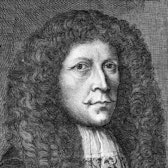
Heinrich Biber, the composer of the Mystery Sonatas, was considered Austria's answer to Monteverdi and the greatest violin composer of his century.
You might also enjoy...
Biber: Sonaten über die Mysterien des Rosenkranzes
Joseph Marchand: Suites
Giovanni Antonio Pandolfi Mealli: Violin Sonatas Op. 3 & 4
Biber: Rosenkrantz Sonaten
Mystery (Rosary) Sonatas, Sonata No. 3 in B Minor "The Nativity"
Sonatæ Violono solo "1681": Sonata No. 2 in D Dorian Mode, C. 139: II. Aria
Johann Jakob Walther: Scherzi da violino solo
Heinrich Ignaz Franz Biber: The Rosary Sonatas
Gibbs: Violin Sonatas, Op. 1
Mystery (Rosary) Sonatas, Sonata No. 1 in D Minor "The Annunciation"
Sonatæ Violono solo "1681": Sonata No. 7 in G Major, C. 144: III. Adagio
Mascitti: Sonate a violino solo e basso, Opera Nona