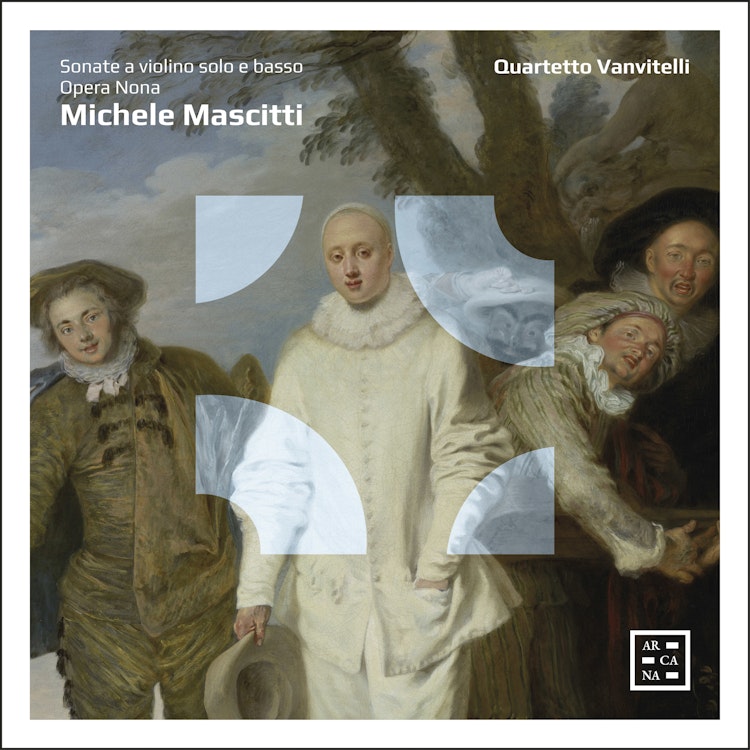
Mascitti: Sonate a violino solo e basso, Opera Nona
4/3/2020, 34 Tracks, 1:08:44
Featuring
Quartetto Vanvitelli
Michele Mascitti
Did you know?
1/6
Historical Context
Mascitti's arrival in Paris coincided with the decline of absolute monarchy and the rise of a new bourgeoisie and aristocracy that enthusiastically supported Italian music.
Composition History
Mascitti's Sonate a violino solo e basso, Op. 9, published in Paris in 1738, was his final creative work and came at the height of a three-decade-long compositional career.
Composer Biography
Michele Mascitti, the composer, was born in Villa Santa Maria, Abruzzo, and moved to Naples at a young age to apprentice with his uncle, acclaimed violinist Pietro Marchitelli.
Compositional Technique
Mascitti's Op. 9 sonatas demonstrate a blend of Italian and French styles, a new synthesis that made his language more original than his previous collections.
Critical Reception
Mascitti's music maintained its popularity even amidst new musical trends, with chronicler Pierre-Louis Daquin noting its enduring sales due to its playability and beauty.
Composer Biography
After over 35 years in Paris, Mascitti received French citizenship in December 1739 and married Marie-Anne Labattue at the age of 75, with the influential Crozat family as witnesses.
You might also enjoy...
Biber: Sonaten über die Mysterien des Rosenkranzes
Joseph Marchand: Suites
Giovanni Antonio Pandolfi Mealli: Violin Sonatas Op. 3 & 4
Biber: Rosenkrantz Sonaten
Mystery (Rosary) Sonatas, Sonata No. 3 in B Minor "The Nativity"
Biber: Mystery (Rosary) Sonatas
Sonatæ Violono solo "1681": Sonata No. 2 in D Dorian Mode, C. 139: II. Aria
Johann Jakob Walther: Scherzi da violino solo
Heinrich Ignaz Franz Biber: The Rosary Sonatas
Gibbs: Violin Sonatas, Op. 1
Mystery (Rosary) Sonatas, Sonata No. 1 in D Minor "The Annunciation"
Sonatæ Violono solo "1681": Sonata No. 7 in G Major, C. 144: III. Adagio