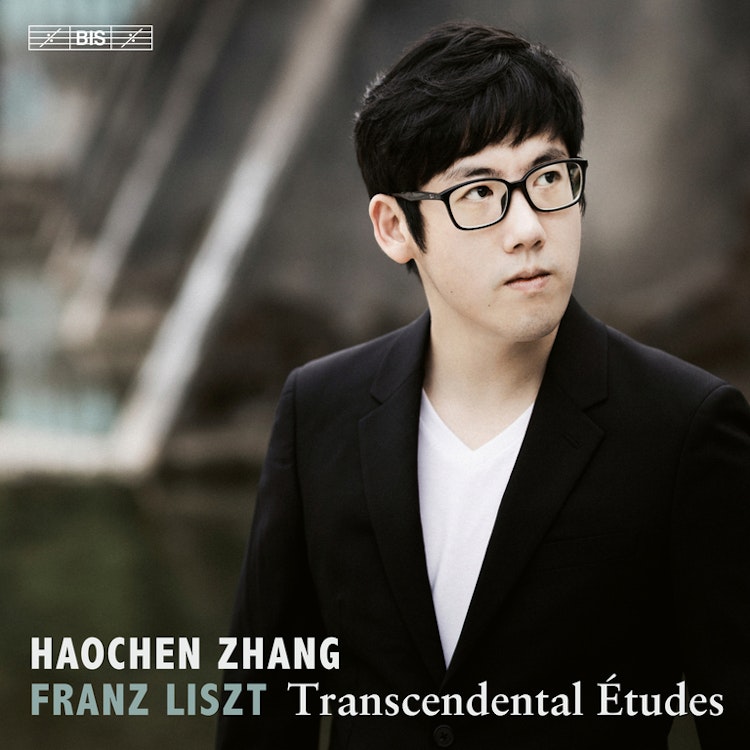
Liszt: 12 Études d'exécution transcendante, S. 139
7/28/2023, 12 Tracks, 1:06:49
Featuring
Haochen Zhang
Franz Liszt
Did you know?
1/7
Compositional Technique
The tonal arrangement of the twelve Transcendental Études follows the circle of fifths, creating a varied cycle of emotions and characters.
Composer Biography
Robert Schumann, a contemporary composer and critic, described Liszt's 1837 Études as "genuinely stormy and horrific studies, études for ten or twelve people in this world at most."
Compositional Technique
The Transcendental Études are explicitly programmatic, with ten of the twelve pieces bearing titles, reflecting Liszt's focus on programmatic ideas that also shaped his symphonic poems.
Performer Biography
Haochen Zhang, the pianist on this recording, won the gold medal at the Thirteenth Van Cliburn International Piano Competition in 2009.
Compositional Technique
The Étude No. 4, "Mazeppa," is inspired by a poem by Victor Hugo, depicting the death ride of Mazeppa, chained to a horse, and his eventual rescue.
Critical Reception
In 1839, when Liszt announced he would play a 'studio' (étude) at a concert in Milan, he was met with heckling, with one audience member stating, "I come to the theatre to be entertained, not to study!"
Composition History
Franz Liszt's Transcendental Études underwent several revisions, starting with 48 pieces in 1826, then 24 in 1837, and finally settling on 12 in 1851.
You might also enjoy...
Liszt: Transcendental Etudes, S. 139
Liszt: Faust Symphony, S. 108
Liszt: Eine Faust-Symphonie, S. 647 (Version for Piano Duo)
Liszt: Piano Works Vol. 7 - Etudes d'exécution transcendante